WORDS Rene Agrandano

We’ve all heard how social media can damage mental health. But when you’re navigating life with limb loss, it can also be a lifeline. Scroll past the product pitches and inspiration clichés, and you’ll find a community that gets your reality.These six creators are leading the conversation across platforms from Facebook to TikTok. They’re covering everything from mental health to music, fashion to fitness, and even sharing the healing power of humor.
Here, they open up about the content they’re proudest of, the stories they almost didn’t share, and the impact they hope their posts leave on the world.
Tilly Locke
Focus: Fashion, prosthetic design, motivation
Location: England
Instagram: instagram.com/tilly.lockey
TikTok: tiktok.com/@tillylockey
Q: Walk us through the post or video you’re most proud of. What made it feel worth putting out into the world?
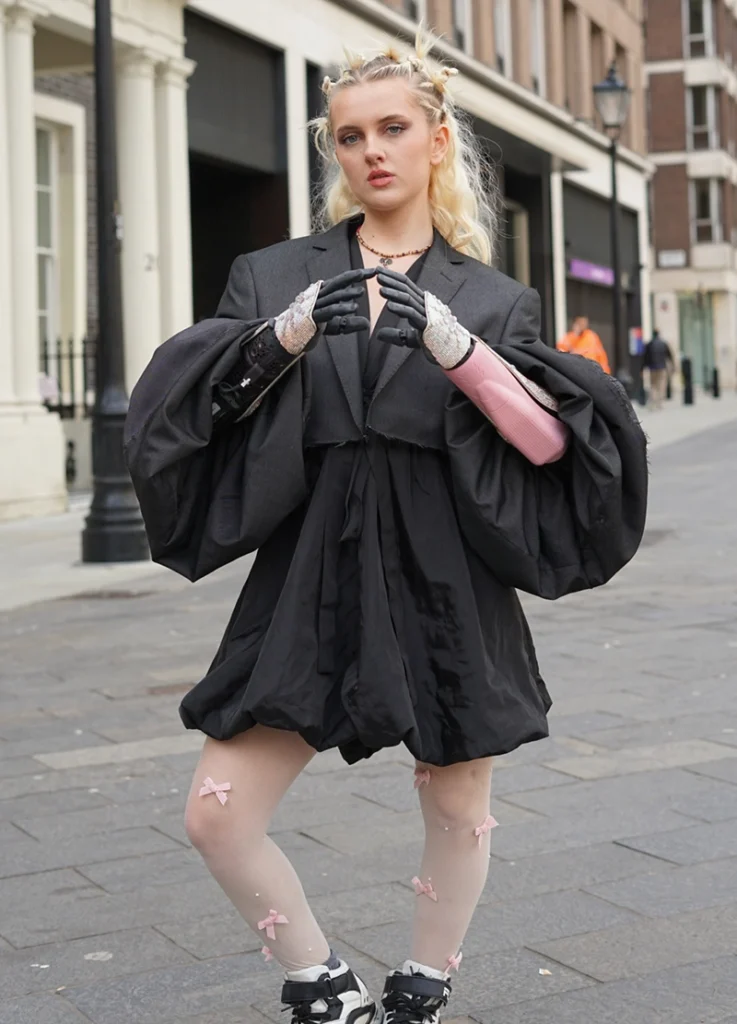
A: Somebody told me to paint my prosthetics beige which, no shade at all to them, but it’s kind of the opposite of what I want to do.
My entire journey feels like a statement to my younger self. Because she asked for a prosthetic and was given a glove. Everything was cosmetics and high-definition silicone, designed to help me blend in as much as possible. It always felt like I had to do all of this to make other people more comfortable. Being told that repeatedly growing up, it does something to your psyche for sure.
And my question was, “Why?”
Why was I going above and beyond to blend in, what’s wrong with me as I am? The truth is: absolutely nothing. But it took a long time to realise that. Then it became a statement to co-design arms that look superhuman, collaborate with video game companies to make something cool or even DIY it, cover them in glitter and flashing lights.
In my favorite video, I told a story as I gently slotted fresh flowers into the magnetic covers [of my prostheses], accentuating and dressing them up even more. It ended, “So no, I will not spray paint them beige, but in fact add more glitter.” It’s one of my favorite videos to this day.
Q: What’s something you used to avoid sharing online that you now post without a second thought?
A: My scars, 100 percent. When I started my social media journey I was probably peak insecurity with them. They’re all down my legs and they never came out. I’d never wear shorts, even on the hottest summer days.
Now I actively include them and that’s been an incredibly freeing transformation. I remember being scared to publish photos showing them because they felt like my biggest insecurity at the time.
Now I think they’re beautiful. They symbolize strength and what I went through, but I’ve also found aesthetic beauty in the patterns and the way they shine on my skin.
Image: Alexander Rose; instagram.com/the_alexander_rose/
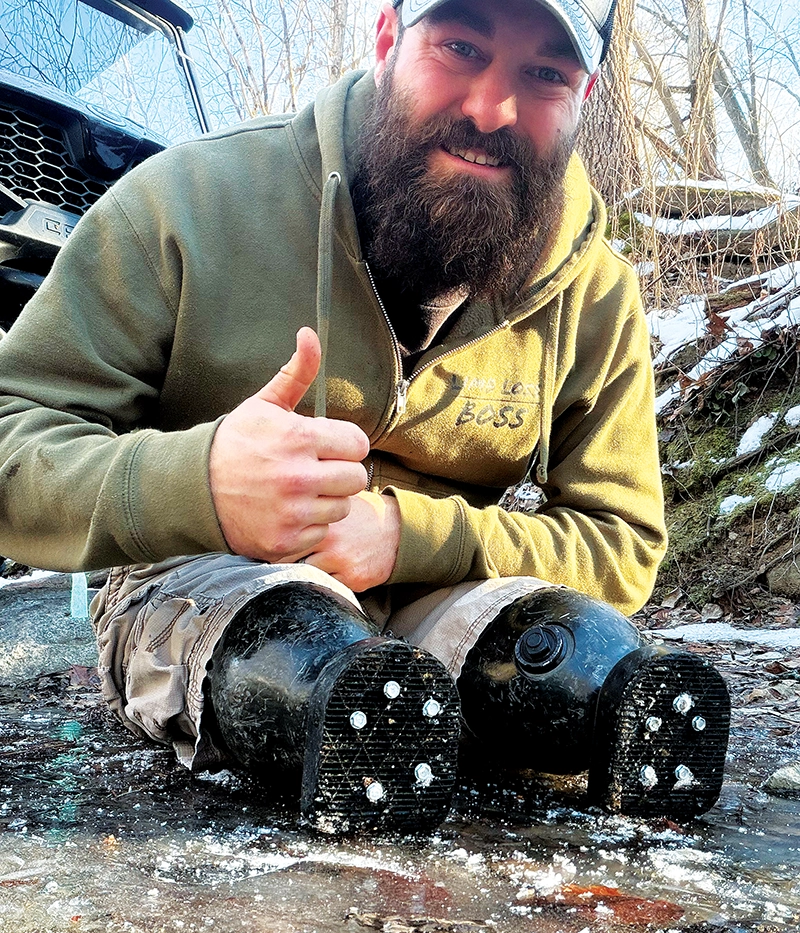
Hayden Bailey
Focus: Humor, motivation
Location: Illinois
Instagram: instagram.com/limblossboss
Facebook: https://tinyurl.com/3jz9bwrs
Q: How are you growing your circle of influence? Do you have a particular strategy or mentor?
A: I don’t know what I’m doing! I’m just working really, really hard at it. I’m just throwing it at the wall and seeing what sticks and learning as I go. And staying consistent with it, above all.
This is 110 percent by accident. It’s more intentional now because I know what I’m trying to do, and I see the potential of what’s possible. But on the same token, I also need to check myself on that sometimes. When you know what’s possible and you get 100,000,000 views on a video, you shouldn’t set the bar to try and do that every day because you’ll drive yourself crazy.
Q: If someone new to the amputee community discovered your content tomorrow, what would you want them to walk away feeling?
A: I would want them to take away, “Life goes on; learn to appreciate it because life’s not over. It’s just that the game changed a little bit. It might’ve gotten harder, but everyone’s playing a different game, so don’t compare yourself to others.”
Figure out what you want and be willing to commit to it, and go for it. It’s so worth it, and it’ll pay off tenfold. If you want to walk on prostheses, find a qualified clinic that has proven results. I was given the handbook on how to be a successful bilateral above-the-knee amputee, at Bilateral Life Camp, a free three-day workshop in Oklahoma by Dream Team Prosthetics. Going to a peer-run event by people with the same limb-loss level as you gives you the knowledge to show what’s possible.
I went for it, and my life has been greater than I ever could have imagined even when I had legs. The gratitude from getting a normal existence back is so profound. I love to share that with people.
Commitment and dedication will take somebody ten times further than, for lack of a better word, half-assing your recovery and expecting good results. Appreciate it. Embrace it. Buckle up and work hard and then you’ll end up somewhere else you never thought you could be. It’s worth it.
Image: Hayden Bailey
Chloe Valentine
Focus: Fashion, beauty
Location: New York City
Instagram: instagram.com/chloevalentinetoscano
TikTok: tiktok.com/@chloevalentinetoscano
Q: Walk us through the post or video you’re most proud of. What made it feel worth putting out into the world?
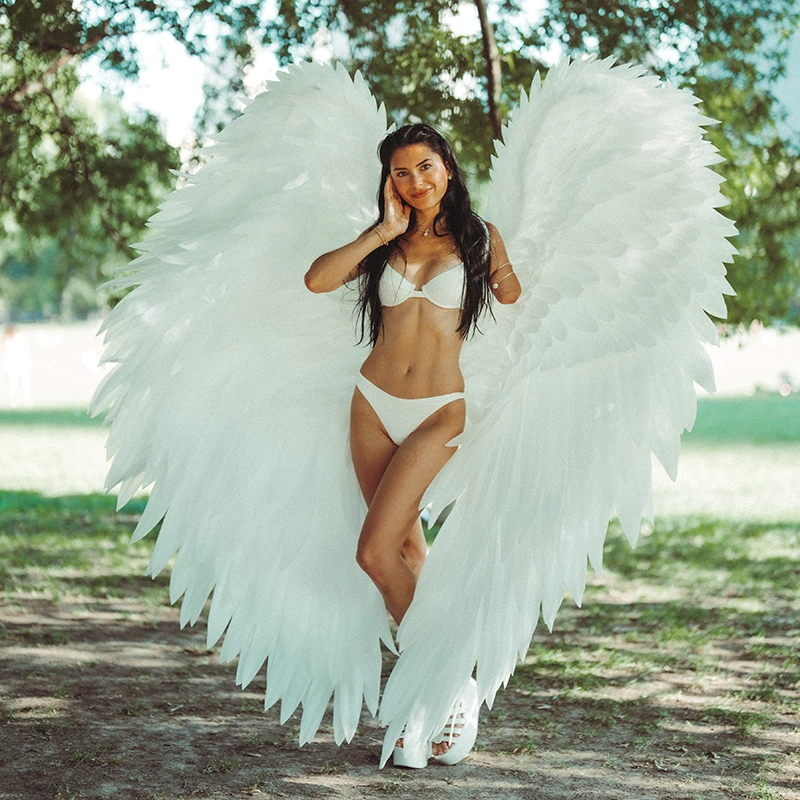
A: One of the videos I’m most proud of is a shoot I did with an amazing photographer named Henry Jimenez where I was styled as an angel wearing these massively oversized wings.
We shot it in Central Park and the public got very involved, with some people even trying on the wings. It was so fun and collaborative and seeing how beautiful everyone was with those wings on was the best.
I also loved it because it just felt sexy in a very straightforward way, not “sexy for an amputee,” just sexy. That felt important to me, since that’s not always how people expect to see someone with one arm.
Q: Are you a what-you-see-is-what-you-get creator, or do you deliberately keep certain parts of your life, personality, or emotions off-camera? Where do you draw that line?
A: I don’t lie on my social media, but I do filter what I post. And I think the line between those two things can get pretty blurry. When you choose to only show certain parts of your life, the bigger picture can end up feeling a bit skewed, and I’m definitely guilty of that.
I tend to share my breezy, more lighthearted side, but there are parts of my life that don’t always make it on camera. For example, I struggle with fairly severe contact OCD, which honestly impacts my day-to-day more than having one arm. It’s just not something I always choose to unveil.
Q: If someone new to the amputee community discovered your content tomorrow, what would you want them to walk away feeling?
A: I’d want them to know that it’s really not that bad. Your limitations are only as bad as your solutions, and you can work to find those solutions.
Being an amputee doesn’t feel limiting to me, and I’d hope that someone new to the community would be able to find peace in that.
Image: Henry Jimenez of henryjimenz.com
Ben Lovell
Focus: Athletics, adventure, motivation
Location: Tenerife, Canary Islands, Spain
Instagram: instagram.com/justtheoneleg1978
Facebook: facebook.com/ben.lovell.376
Q: Some creators say it’s not their job to educate the able-bodied world, while others see it as central to their mission. Where do you land?
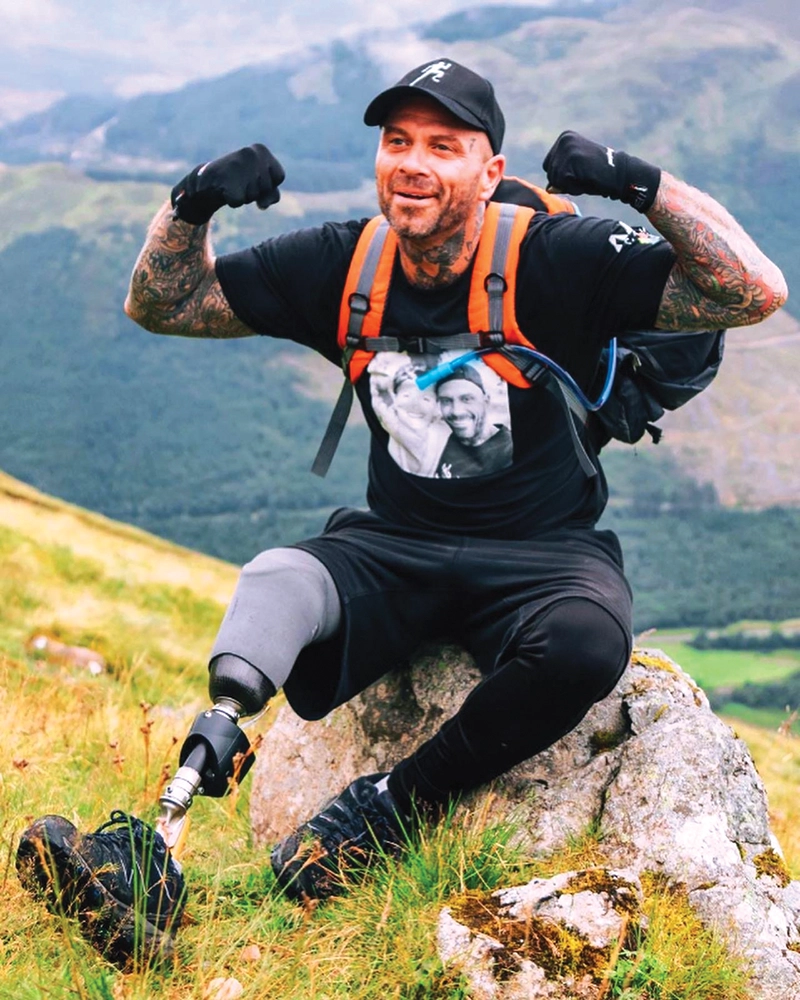
A: I do think it’s important to educate able-bodied people. I regularly do posts about how able-bodied people see amputees. So, how they think it works when they lose their leg, come out of hospital, get prosthetics, and start walking, and that’s job done. I’ll describe it in a lot more detail so they understand. Like when you come out of hospital, you don’t just go get your prosthetic leg. You’ve got to deal with all the pain and stuff like that. Then you get the leg and it doesn’t really fit. And then you deal with the aching bones, the lack of energy [because] you’re using [a prosthesis] compared to when you were able-bodied. I like to talk about the fact that if I do climb a mountain or do something that takes a lot of energy, the day after I can’t necessarily get my leg on.
So just because we can do great things, climb mountains, run, do all this stuff, which is amazing, it doesn’t mean we can do that every single day.
Q: If your followers had to describe you, what do you think they’d say? Would you agree with them?
A: I think they’d say I was raw, just because of the story that I tell about my journey. You know, it’s not just about the good stuff, it’s bad stuff too. They’d say that I possibly could be confrontational. But I think there’s a lot of people that are on the internet that don’t say anything bad because they want to come across as a certain way. And I’d just rather be real. Hopefully they’d say that I’m motivating, just for the fact that I’ve not really let what’s gone on dictate my life. I’ve kind of turned that around.
Image: Courtesy Laura Elliott
Jack Thomas
Focus: Music/multi instruments, audio engineering, motivation
Location: Vancouver, British Columbia, Canada
Instagram: instagram.com/jackthomas
Facebook: facebook.com/jackthomasmusicandproductions
Q: Are you a what-you-see-is-what-you-get creator, or do you deliberately keep certain parts of your life, personality, or emotions off camera? Where do you draw that line?
A: I’m a pretty open book deliberately. I am frequently viewed as a very positive, kind person who’s always smiling. But I make it well known that I too am human, and that I also struggle with mental illnesses such as major depression, PTSD, and anxiety.
My whole purpose for posting videos and sharing details about my life is of course partly in search of that validation and acceptance that I seek externally, but also because I know from a lot of experience and examples that I have a large following of people who have been helped by and appreciated my openness and honesty when it comes to what I truly struggle with, and how I respond to those struggles.
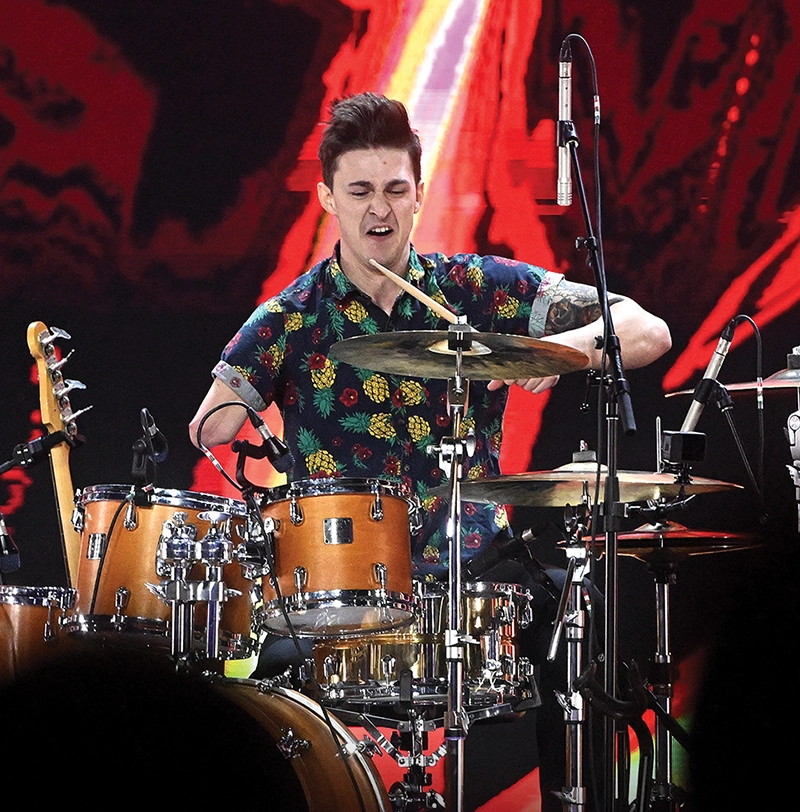
Being able to visit schools for all ages to tell my story, play drums, and advocate for accepting life’s challenges and loving who you are and where you are at in life right now is a privilege I don’t take lightly.
Q: What’s something you used to avoid sharing online that you now post without a second thought?
A: Anything personal. I tried very hard at first to make my content solely about my drumming and musical endeavors, but over the years have recognized and accepted that I am so much more than just a drummer. Having the ability to share my story and express my feelings to a large audience isn’t very common for people who have gone through such trauma, so I feel it is important for me to utilize that skill and comfort, especially knowing it does indisputably help many, many people, even if my mind has a hard time believing it.
Image: Courtesy City TV
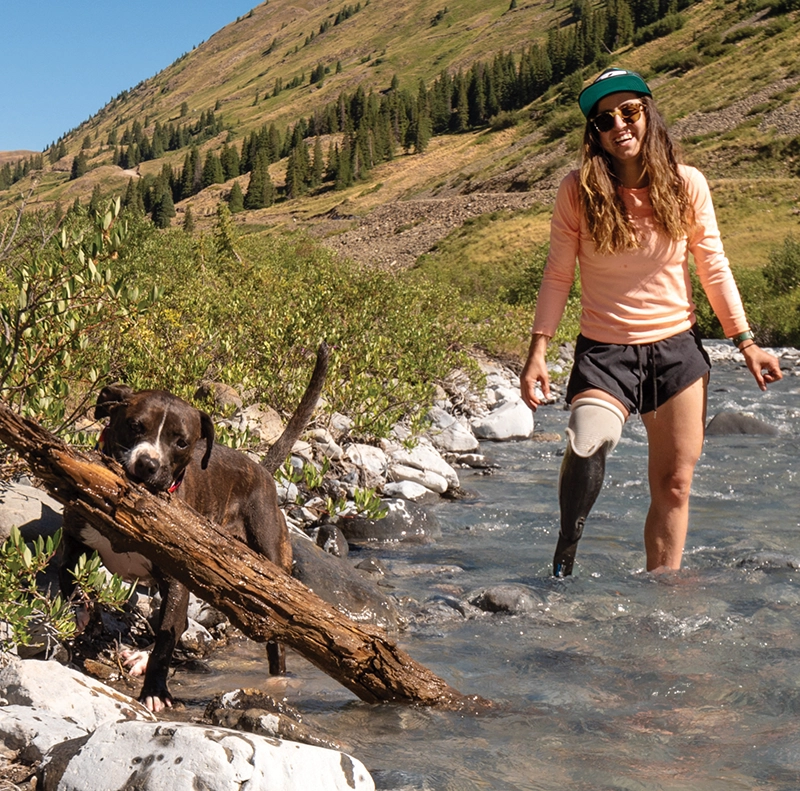
Angelina Martinson
Focus: Adaptive living, prosthetic tips, amputee fitness
Location: Colorado
Instagram: instagram.com/adaptiveamputees
Facebook: facebook.com/adaptiveamputees
Q: Is there a topic related to being an amputee that you wish more creators in this space would discuss more openly? If so, what?
A: The fact that we don’t get a prosthesis and become superheroes. Healing, even for able-bodied people, isn’t linear. We have ups and downs, and our journeys are all so unique. I do not have a “perfect” gait, and I never will due to my anatomy. I will never be a marathoner and, honestly, I have no desire to and that is okay. Work toward goals that matter to you and understand there will be setbacks.
Q: Has a DM or comment from a follower ever moved you or changed the way you think about something?
A: Yes. I posted a running video once before and someone felt very alienated by it. They couldn’t ever see themselves running. It broke my heart because that is definitely not my intention. I have lots of videos where I try something new. Running, paddle boarding, white water rafting, etc. I was very humbled that trying things is a privilege. My body is strong and capable of trying a lot of things. I may not be good at any one of them, but I am fortunate enough to be able to do so.
Q: Have you ever posted something that bombed with the algorithm, but meant everything to you and your community?
A: All the time. There is so much I put out there that feels very important and I want others to feel seen, but the algorithm doesn’t always line up with that.
Q: What does the mainstream media still get wrong about the amputee community?
A: The constant inspiration show. I like to tell my followers, “You don’t have to turn this into a powerful story.” When someone goes through something so traumatic like amputation, they don’t necessarily want to become someone else’s inspiration or motivation. Not every person is a runner or mountain climber. Sometimes it would be nice to see an amputee just being a friend, a mom, a kid learning piano.
Image: Courtesy Nick Martinson
Opener image by InfiniteFlow/stock.adobe.com