
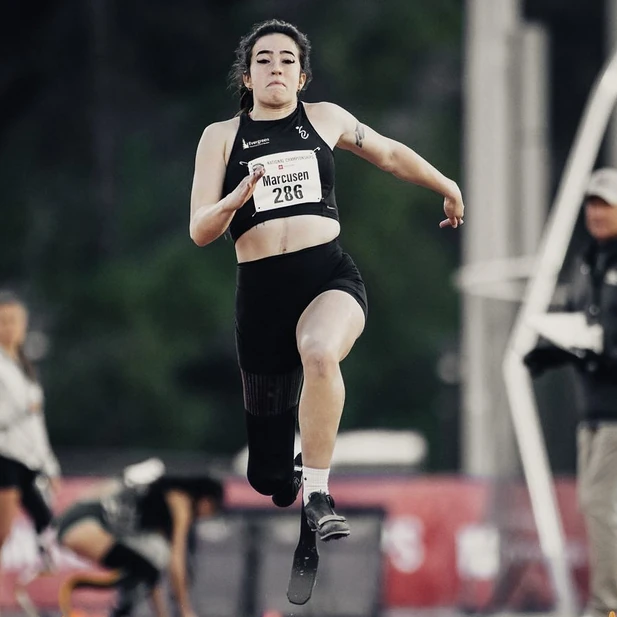
Six years ago, thanks to an airline’s carelessness, Lindi Marcusen got stranded with no wheelchair and no prosthesis on her trip home from an overseas vacation. “They were so ignorant about disability,” says Marcusen, a Paralympic athlete who flies routinely. So when she was asked to join the Invisible Class campaign to promote accessible travel, she jumped at the chance.
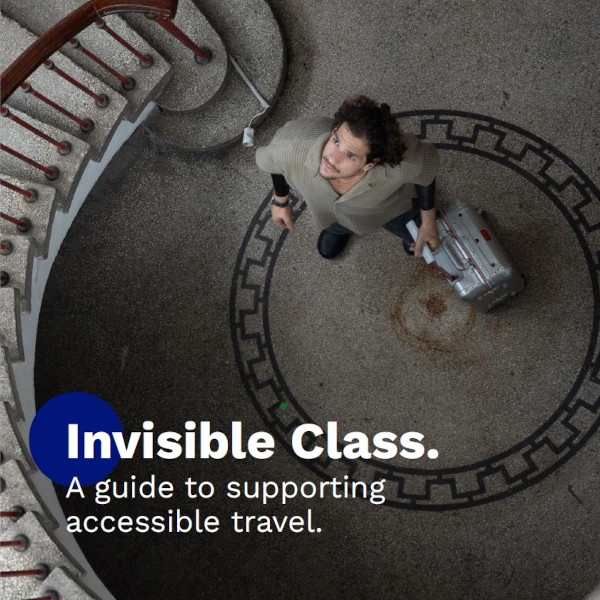
Created by Ottobock, this international awareness campaign is focused on the barriers that airports, hotels, restaurants, museums, and other destinations pose for travelers with limb loss and other disabilities. There are built-in challenges getting to and from Marcusen’s hometown of Spokane, which only has nonstop flights to about 15 US cities. She’s almost always hustling to make connections, hauling carry-ons and mobility aids on journeys that run through airports, Ubers, food courts, and hotels. They usually last for many hours, door to door. Add inaccessability to the mix, and those can be some lonnnng travel days.
Marcusen has another major trip coming up in at the end of this month, to the Para Athletics World Championships in New Delhi. It’ll be her first appearance at Worlds, following her Paralympic debut last year. We caught up with Marcusen last week to talk about her travel nightmares, helpful hacks, and goals for the Invisible Class campaign. Our conversation is edited for length and clarity.
How did you happen to get connected to the Invisible Class program?
This is actually a branch of the campaign that Ottobock launched during the Paralympics. It was called the Invisible Discipline, and it was shedding light on the difficulties people with disabilities have, not only training for the Paralympic Games and competing, but what obstacles we have in daily life.
This campaign is really focusing on travel, because travel has so much room for improvement. And that’s not going to happen unless you’re first aware of all the places where you can improve. I got involved because I work with Ottobock as an ambassador, and it’s really important to me to talk about experiences as someone with a disability, because able-bodied people just don’t know what they don’t know. They’re only know if people talk about it.
What kind of response have you gotten to this campaign? When people do become aware, what kind of reactions do people have?
The responses that I get when I tell people about the experiences I’ve had as a person with a disability is always disbelief. They’re just like, “I didn’t think of that,” or “I can’t believe that happened, I can’t believe that’s something that you have to deal with.” The value of the Invisible Class initiative is that it makes people more aware of the need. My family and friends are way more aware [than the average person] of whether places are accessible, if parking is accessible, if a building is easy to get into, and what kind of experience I will have as a person with this disability. They’re way more aware and more willing to talk about it and stand up to those businesses and explain, “This is how it could be improved to be a little bit more accessible.”
What are some of the worst case scenarios you’ve experienced that exemplify the lack of awareness that can exist in the travel industry?
For me personally, the worst experience I’ve had traveling was when my husband and I were coming back from a vacation in Italy in 2019. I was not wearing a prosthesis, so I was relying on my wheelchair for my mobility. I gate-checked my wheelchair on the flight out of Italy, but when we got off the plane to switch flights [in Dallas], I found out they had checked my wheelchair all the way to Spokane. So I didn’t have my wheelchair, I didn’t have my prosthesis, and we still had two connections to make. And everybody from the airline just kind of shrugged and said, “Oh well, you’ll just have to use the airport chairs.”
They just had this ignorance that wheelchairs are built for the individual, to fit your body and make mobility efficient and easy. The airport chair requires somebody to push you, so your independence goes right out the window. As it turned out, they didn’t even know where my wheelchair was. It didn’t actually show up to in Spokane until three days after we got back.
Were you wearing Team USA garb on your way back from a competition, or was this just a vacation?
This was just a vacation. And I will say, if I am wearing Team USA stuff, I get treated a little bit better. Although when I was coming back from the Paralympic Games last year, one of my teammates I was traveling with was using a wheelchair, and they lost his chair. We were wearing our team gear, but the people in that case were just as ignorant. They said, “You can just use another wheelchair.” And he’s like, “No, you don’t understand. This is my mobility. It’s my legs.”
There’s lots of room for improvement just in the communication about wheelchairs. I don’t travel with a wheelchair every time, but when I do, I am adamant with the gate agents to get it gate-checked. It’s no different from people who are traveling with their children and gate-checking their car seats. That kid cannot go in a vehicle without the car seat. They can’t go anywhere. It’s the same idea for wheelchairs: That’s your mobility. You can’t go anywhere without it. But with wheelchairs, for some reason, people just don’t make that connection all the time.
I know all the airlines have some disability training, but I think it needs to be revamped. They need to talk to people who have disabilities and get real, actual feedback on how to treat someone with a disability, how to handle their adaptive equipment, so we have a better experience in TSA lines, getting on airplanes, and getting to and from gates.
What other obvious areas of improvement do you think are out there?
Accessible rooms in hotels are always kind of a toss-up. There are a lot of times where you just have to adapt and figure it out. I remember one hotel in Portugal, there was a step up to the bedroom. My roommate used a wheelchair full-time, so it just wasn’t accessible. When you’re booking for those, you have to be really up-front about what you need. Even if it’s labeled as accessible, it may not really be that accessible. If you have something you can bring with you, like a foldable shower stool, it gives you something to fall back on in a worst-case scenario. It does require some forethought and thinking ahead.
Something I’m really excited about is Ottobock is putting together a map that tags locations that are accessible, where people with disabilities have great experiences. The map is just going to get bigger and bigger across the world, and I really hope businesses are going to see that and think about offering an experience that is good for everybody. Another thing is universal design. That improves access for everybody, not just people with disabilities. It improves access for families and elderly people. I always say that everyone is just temporarily able-bodied. At some point everyone is going to need a mobility device, or they’re gonna have trouble getting up stairs and they’re gonna need to take the ramp. Universal design is just better for everybody. And I hope that catches fire in businesses, in events, in any place where a big group of people come together, so that it’s a better experience for everybody.
Where’s that map available?
It’s on the Invisible Class page on the Ottobock website. There’s a link where people can chime in and share their own tips and experiences and locations. When you click on it, it pulls up a Google Map with the Ottobock travel list.
You mentioned that sometimes you bring a foldable shower chair with you, and you gate-check your wheelchair. Are there other travel hacks that have saved you time, hassle, or money and made travel less of a headache?
When I’m traveling to competition, I’m traveling with three additional prosthetics — a sprint leg, a long jump leg, and a training leg. Those cost way too much money to go through the baggage system, so they’re gonna come on the plane with me in a separate bag. The key term I use is that it is a “medical bag” that needs to be with me at all times.
Where do you stow that?
I usually ask if I can put it in the closet. My legs are small enough to fit in the overhead compartment, but I would prefer them in the closet. And usually airlines are pretty good about it if I say, “This is a medical bag, it needs to be with me.” It’s not a special privilege because I’m a Paralympian. Anyone can use this. Since so many states are passing the law that requires insurance to pay for additional prosthetics, I want people to know that they can bring their running leg or their water leg on trips with them, and they don’t have to pay extra.
You’re talking about So Everybody Can Move, which has done a really great job of messaging They’ve made it clear they’re not asking for special privileges, they’re just asking to be granted the same privileges able-bodied people take for granted. It feels as though Invisible Class is sending the same message.
Absolutely. There are barriers that need to be worked on and brought down. A lot of it comes from ignorance, So it’s about reframing how people view disability, That is a big ship, and it’s going to take all of us to turn it.
How does the Invisible Class compare to the advocacy you’ve done to bring about equity in athletics?
Being combined with the able-bodied athletes this year for Nationals in Eugene was a big step forward. But people have been working on that since the early 2000s. So many athletes that have advocated that we have a place alongside the able-bodied athletes. It’s still track and field. We just happen to have disabilities.
Getting that media attention is huge, because people need to see what’s possible and expand their perception of what disability looks like. So then maybe we can have higher expectations, and make it easier for people [with disabilities] to contribute to society.
I’m mystified that it took so long for the track and field governing bodies to unify. It feels as though there’s a huge opportunity to engage a whole new audience of sports fans. Why do you think there’s been so much resistance?
I think a lot of it is — I’m gonna be super honest — they don’t think people will watch it, so they’re not gonna make money out of it. It’s all in how you package it. If you bridge that gap of knowledge so people know what they’re watching, they’ll watch.
What are you working on between now and the Worlds?
I’m just refining right now, making sure I’m hitting the positions I need to and getting into more of a flow. I’m a back half-racer — that back 50 meters is where I hit my top-end speed. I can close. We’ve put more focus on getting my start better and quicker, being more dynamic and explosive. I’ve improved a lot in that this year. My time still isn’t the best I’ve ever run, but we’re building and trying to make sure I peak at the right time.