
How Katie Thomas Became an Accident Advocate for the Limb-Different and Amputee Community
By Melissa Bean
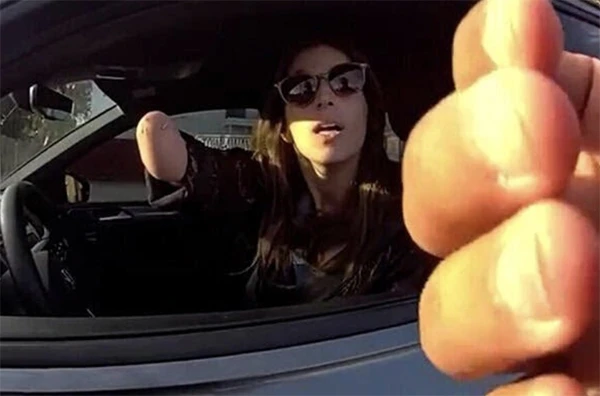
It was an ordinary day in February. Katie Thomas took her kids to school and an hour later, she’d gone viral online after being pulled over for using a cell phone while driving. More specifically, she’d been ticketed for holding a phone in her right hand – except she doesn’t have a right hand.
Some two months later, the citation was dismissed and Thomas had obtained and shared body cam footage of the traffic stop. From the major morning shows, to The New York Times, to news outlets, podcasts and commentaries around the world, millions have seen the footage of the traffic stop and heard her take on the experience.
Thomas never had any intention of becoming an influencer, it just happened, and she has since deleted her online social media accounts. She, her husband and two children have an entire life outside of Instagram and TikTok they value more than notoriety. Still, Thomas has had an enormous impact on the conversation about limb difference and amputation.
What were you thinking that day during the traffic stop?
I just dropped off my kids at school, and I was going to grab breakfast. I was literally in my pajamas. When I got pulled over, I immediately started to wonder what I had done. Then, I tried to diffuse the situation with humor by laughing – and we all saw where that went. I really didn’t think it would escalate the way it did. But I wasn’t worried, because I knew I could disprove the accusation. I thought, ‘the worst is I’m going to get a ticket, but I know I’m going to beat it.’ I knew I had proof right then and there. I chose to laugh because that’s my right. In my opinion, if you’re the person who has a difference you get to decide what response is appropriate for you. At the end of the day, it’s your body.
Why did you choose to share the experience through social media?
Honestly, my friends and I just thought it was hilarious. I posted it thinking it was funny, as naïve as that sounds, and then it blew up and became this thing that I could no longer walk away from. Everyone was so invested in it, and so many people were reaching out – and not only about the traffic stop. They were wanting to know about my daily life and asking questions they wouldn’t normally feel comfortable asking. It became an opening to start the conversation about limb difference. That’s part of why I was on social media sharing as an adaptive athlete, but I just did not have the traction. I had about 60 followers.
What has it been like to gain this much attention for sharing the details of the traffic stop and the body cam footage?
It was global. It was amazing. It also became overwhelming. As someone who has been open about mental health, I’m not going to shy away from explaining why I deactivated and then completely deleted my social media accounts. I have a panic attack disorder and generalized anxiety disorder, both of which majorly flared up with all of this becoming being so public and so huge.
Is there some other way you would have liked to achieve this kind of recognition?
I would have preferred it to come in more of an athletic aspect – but the day is young. I’ll be recognized as an athlete when I start coming in first, and that has always been the goal. In July, I’m headed to the USA Volleyball’s Women’s Sitting National Team training camp. I was on Instagram and TikTok in case I decided to pursue a platform as an athlete and to gain sponsorships.
Thousands of online comments have been supportive, but others have been negative and even critical. How do you respond to that?
I don’t respond. I’m so unfazed. I grew up with two brothers. I made it through middle school. Somebody on the other side of the screen is the least of my worries.
Many people with limb differences and amputations regularly face negativity including discrimination and disrespect. Has this been your experience?
My instinct is to say ‘not regularly,’ but I’m inherently aware that I have a tendency to brush off things that affect others more deeply. It might seem like I don’t experience those things, but I probably do, I just don’t label it that way. Your attitude about how your limb difference affects you drastically and changes the way you perceive the things that happen to you. I didn’t always feel this way, but I’ve gotten to the stage where I have a “glass half full” point of view on my limb difference.
Before this experience did you consider yourself an advocate for the limb different community?
I did not take proactive steps toward advocacy, but I figured if the opportunity slapped me in the face I would. And then it did. I didn’t realize this many people would be so interested. You go about life thinking you’re so inconsequential. And I’m a go with the flow person. I’m not reactive, so it’s hard to get to that level of intensity.
What would you recommend people with limb differences and amputations do if they encounter ignorance of this kind?
Everyone’s response has to be individualized. I would say that’s a conversation to have with yourself and a close friend. Look at it from a multitude of perspectives and decide how you will react. However you feel the most comfortable responding is the correct way to respond. I feel that way because I never liked people to speak for me. I don’t see the world in black and white and can’t advocate for an entire community in absolutes.
Now that you have access to the soapbox, what would you like to say?
Why are we in America not having limb different people teach amputees how to live and work with limb loss? It would instill so much hope and mental strength. I’ve always felt strongly that people who have lost a limb are having a different experience than those who have been born with a limb difference. I think we should capitalize on the abilities of people born with limb differences to help veterans and those who lose limbs to disease and accidents. You can’t have a two-armed person tell you how you’re going to button your pants or put up your hair or cut your steak. For those of us who were born this way, we can show those who experience amputation that this isn’t the end of their life. This isn’t the end of their career or the end of their happiness. This is the beginning of something different.
What would you like the world in general to learn from your undeserved citation?
If anybody takes anything away from this, I would like it to be that we need to normalize asking questions. How many times have you wanted to know more about someone else’s story? I think my personality makes me approachable and causes a lot of people to feel brave enough to ask questions. The more we talk about limb difference, the more people will be able to approach it appropriately. I’d prefer somebody staring at me rather than refusing to look at me any day because it means they are curious. My world is so much bigger and better than just this incident. I encourage people to ask the thought-provoking questions and explore all of our differences beyond just the physical.