
By Kim Ousley
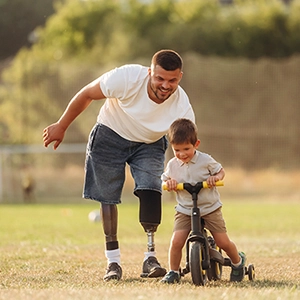
What does it mean to be a father when the way you’ve always defined strength begins to shift? For many amputee dads, fatherhood didn’t change after limb loss. The definition of strength did.
Amputee fathers, Clarence Wiggins and Dave Gibson, offer a glimpse into the vulnerability, growth, and perspective that can emerge after limb loss.
Before becoming an amputee, Wiggins believed being a father meant being physically strong. After limb loss, he realized fatherhood was about much more than physical ability.
“My spirituality strengthened, and I was able to connect with each of my children on a completely different level that I would not have ever accessed had it not been for my amputation,” said Wiggins.
His biggest fear was that his children would no longer see him as a “whole” man. Instead, he found that the emotional and intellectual connections he built with them deepened their relationships.
“I was able to foster a deeper relationship with them.”
For Gibson, his youngest daughter was graduating from high school the year of his amputation in 2017.
“All three of my kids just wanted me to not suffer and for me to continue to lead and love on them.”
Initially, Gibson worried his children would not love him the same way after his amputation. But being open and honest with them about his decision helped ease those fears.
“I’m still me mentally and physically – the flesh part that I’m losing is a physical thing,” said Gibson. “I’m a human being and a father who happens to be an amputee.”
Today, Gibson says his children have expressed a renewed sense of respect and admiration for his resilience and positive attitude.
His message to other amputee dads is simple: Focus on your children rather than your setbacks. Use your experience and wisdom to help them pursue their goals, dreams, and aspirations.
This Father’s Day, remember that while the world may celebrate strong fathers, your children celebrate something even greater: a brave one. And to them, that is everything.