
WORDS Rob Jones
Who am I now? Can I still provide for my family? Will I ever feel like myself again?
For many amputees, those questions arrive long before answers do. There are many ways someone arrives in a recovery room without a limb: trauma, cancer, diabetes, vascular disease. But regardless of how it happens, many people eventually face the same quiet uncertainty in the aftermath of limb loss: What’s next?
For me, the fear extended far beyond the physical loss itself. The realization hit hard and all at once. I worried about identity, independence, and whether life as I knew it was over. Doctors, nurses, and family members could offer support, but no one could fully define what recovery would look like or who I would become on the other side of it.
What I eventually learned is that recovery after amputation is about far more than healing a limb. It’s about rebuilding a life.
My medical care was outstanding from the beginning. My surgeon ensured my residual limb healed properly, and the nursing staff kept me grounded through some of the hardest days. I still remember one night nurse sitting with me in the dim early hours when fear was loudest. She would squeeze my hand and remind me I wasn’t alone.
My wife became my constant source of strength. Every time I woke up, she was there beside me, saying, “Everything is going to be okay.” Even with her constant companionship and support, neither she nor anyone else was able to define what was next for me.
After leaving the hospital, I was connected through TRICARE and the VA to a prosthetic and rehabilitation team that became central to my recovery—what I now think of as my own “recovery center of excellence.” My prosthetist, physical therapists, and support team communicated with one another and treated me not simply as a patient, but as a person trying to reclaim independence.
When my prosthetist began designing my prosthetic leg, she asked not only about measurements and mobility goals, but about who I was before limb loss and what kind of life I hoped to return to. I decided early on that I didn’t want to hide my prosthesis. This was the new me, and I want to be proud of it.
Physical therapy brought its own challenges. I had developed a severe knee flexion contracture that made standing feel unstable and unnatural. But instead of being sent off to navigate another complicated referral process, my care team worked together to adjust my rehabilitation plan. My therapists pushed me hard and reminded me constantly that progress happens one step at a time.
Recovery is not linear. There are setbacks, frustrations, insurance delays, phantom pain, exhaustion, and moments where the future feels overwhelming. But I also learned that acceptance doesn’t mean surrender. It means choosing a path forward, giving yourself permission to grieve what you’ve lost while still moving forward. Small steps matter. A single practice—standing with support, a few steps with a walker—all add up. And knowledge is power. Understanding prosthetic options, rehabilitation timelines, and realistic goals helps you participate actively in your recovery rather than passively enduring it.
The psychosocial dimension of amputation cannot be overstated. Identity reconstruction is a central task. People often ask, “Who are you now that you’ve lost a limb?” The answer is not a single label, but an evolving narrative. Yet the core of who you are—your values, relationships, resilience, sense of humor—remain intact. The new normal is not a negation of the old self, but a reshaping of strengths and considering new possibilities.
One of the most empowering moments in my recovery came when I attended the Amputee Coalition National Conference. Being around other amputees was empowering and exciting. I got to hear stories that both inspired and scared me. Now, when I encounter someone who has recently gone through an amputation, I share my own story and offer companionship on the journey because I know how powerful it is to have someone say, “I’ve been there too.”
Looking back, the recovery room no longer represents fear; it’s a doorway to a future I can shape again. If there’s one thing I would want another amputee to know, it’s this: Life is still waiting for you on the other side of loss.
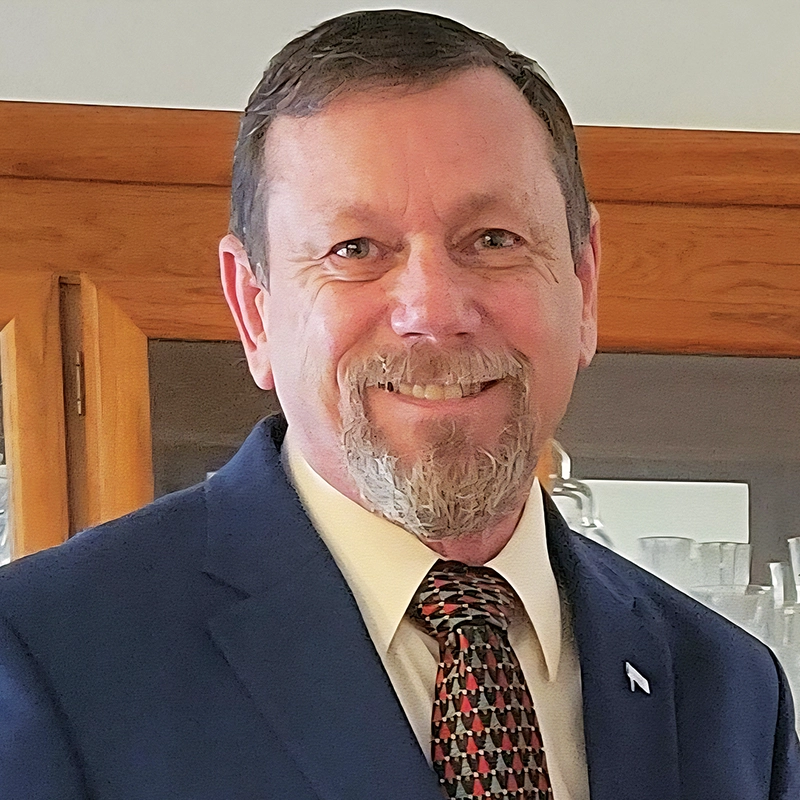
Rob Jones served 35 years in the US Army, including defense contracting. On March 1, 2023, he became a right below-knee amputee. He now advocates for the disabled and serves his community.