

By Kim Ousley
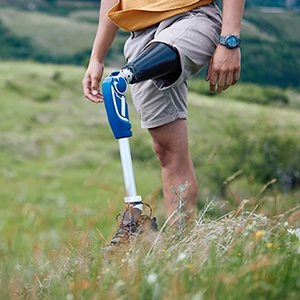
For many amputees, getting outdoors isn’t necessarily the hard part. Knowing what awaits once they get there can be.
An inviting trail may include an unexpected steep grade, an impassable surface or other obstacles that aren’t described in advance. Limited accessible facilities can create additional barriers. Adaptive Adventures aims to change that by bringing adaptive equipment, expertise and, increasingly, better information directly to the places people want to explore.
The nationwide organization recently added adaptive hiking to its programming, expanding outdoor exploration opportunities for people living with physical disabilities. Adaptive Adventures has grown into one of the most mobile adaptive sports programs in the United States, traveling with more than 18 equipment trailers to over 30 states annually to provide adaptive recreation programming.
Executive Director Chelsea Alder is working in Colorado to help make sure parks offer some form of accessibility, including accessible docks, hiking trails and climbing areas.
“I’m doing this whole project right now in the state of Colorado to make it the most accessible state. We’re doing this whole campaign and hopefully we’ll get congressionally directed spending money,” said Alder.
Alder has her own personal connection to disability. Having cared for her disabled Vietnam veteran father and with a brother living with a progressive joint disorder, she understands that access is a right often hindered by a lack of awareness rather than unwillingness.
Adaptive Adventures trains VA staff, physical therapists, park employees, and disabled veterans to sustain adaptive programs. In Puerto Rico, for example, the organization introduced adaptive cycles by transporting 16 bikes, training 85 clinicians, and empowering veterans to lead. The program now serves more than 400 veterans monthly.
Hiking, a challenging activity for many amputees due in part to a lack of trail information, has now become an official Adaptive Adventures program. Accessibility, in this case, includes transparency about trail conditions such as elevation, surface type and obstacles, enabling people to make informed decisions about which trails are right for them.
The organization uses specialized equipment, including:
The GRIT Freedom Chair – a lever-driven off-road wheelchair.
The Joelette – a single-wheeled hiking chair guided by volunteers.
Freedom Tracks – tank-style treads that attach to a user’s own wheelchair, allowing use without a transfer.
Simple tools like the Sidestep transfer platform and Mobi-Mat roll-out pathways can also significantly improve accessibility. These plug-and-play solutions can be quickly adopted by parks to assist users in transferring to adaptive bikes or navigating rough terrain.
Amputees often become advocates themselves by identifying accessibility gaps. Adaptive Adventures fosters a national network of people who understand that greater accessibility benefits everyone—from wheelchair users to parents with strollers and older adults.
For amputees eager to explore the outdoors, Adaptive Adventures offers equipment, training, community and support. Whether through cycling clinics, climbing programs, kayaking or guided hikes, the organization is working toward a simple goal: making more of the outdoors accessible to more people. The outdoors belongs to everyone.