
When my mom got her knee replaced, she became me—a disabled person. And I tried to become her—an ace caregiver.
by Diana Theobold

My mom has always taken care of me. She’s unstoppable. Inevitable. She makes it look effortless. When she appears, everything gets fixed. My Amazon returns get sent, my baseboards dusted, and the broken button on the washing machine replaced. I eat heartily, sleep peacefully, and breathe deeply because Mom’s taking care of everything. And her well for caring never seems to deplete.
She set the bar high after my amputation, which happened 10 years ago after a rock-climbing accident. Mom waited through every long surgery, handled all of my paperwork, dealt with insurance, made sure I got disability benefits from work, and scheduled visits from my friends. Amidst all of that, I don’t know if she found time to grieve. Those emotions had to weigh her down, but they weren’t heavy enough to keep her from showing up at the hospital every day. I wondered if I’d be as strong as she was when the time came for me to take care of her.
That’s a part of growing up that nothing prepares you for. It’s an inevitable role swap—parents age, their bodies fail. But with my disability, I’ve had my doubts about whether I could ever repay my mom for the care she’s always given me, especially in the immediate aftermath of my amputation.
During that time, we regressed in our roles. My parents were back to helping me take my first steps. My mom lovingly called me her “big baby” as she pushed me around in my stroller, er, wheelchair. At that point, I didn’t know what my abilities would be in a year, much less a decade. Would I still be able to take care of my mom as she aged? Or would she always be taking care of me?
Merry Meniscusmas
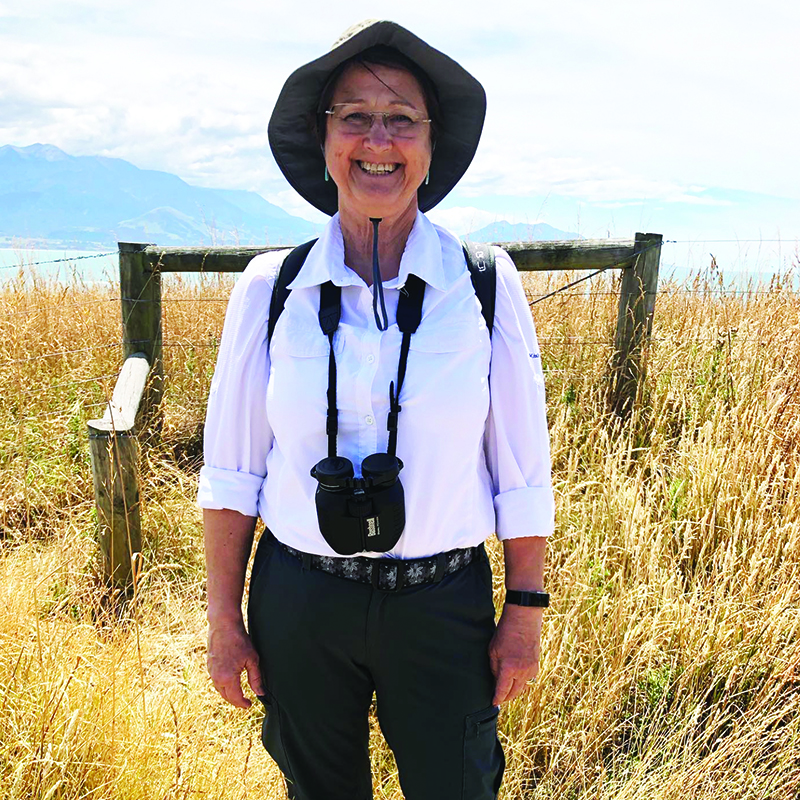
My mom loves hiking. We used to hike together, but I had to give up hiking after my accident. My mother didn’t. It was hard at first to send her off without me, but I adapted by living vicariously through her. She’s hiked in Switzerland, Scotland, and even New Zealand. People imagine her staying in spartan huts while eating nuts and seeds, but the reality is much more civilized. She travels with a group that stays in nice hotels and ventures out for day hikes. My dad teases her that their idea of “roughing it” is having only one choice of white wine at dinner. Outside of these trips, you could find her twice weekly in Saguaro National Forest, near her southern Arizona home, with her local hiking friends.
It was on one of these hikes that she tore her meniscus. Suddenly, she was the Energizer bunny on another brand’s batteries. I didn’t know how much she’d slowed down until she visited me in California. Typically when Mom arrives, you can’t get her to sit for five minutes before she’s chasing my dog around with the vacuum cleaner. Not on this visit. A short walk around my neighborhood had her wincing in pain. She didn’t argue when I suggested she lie down. I hoped it might be a temporary setback. But when she cancelled an upcoming trip and stopped hiking with her friends, I saw she was facing a long-term change in her activity level, just as I had after my amputation.
She wasn’t ready to slow down, and I wasn’t ready for her to, either. When she mentioned that a knee replacement might get her hiking again, I jumped on the bandwagon. I’m a bit biased against keeping busted joints. My salvaged limb is the one that keeps me from hiking. That said, my prosthetic leg also causes its fair share of trouble. We’re challenging nature when we replace flesh with titanium. New isn’t always better than old. But when Mom told me her friends with new knees were hiking better than they had before, that was all I needed to hear. I encouraged her to join my club—women with aftermarket parts. Together, we could slow down every TSA security check in the country.
Her surgery was originally scheduled for January, but a cancellation created an opening on December 20. She worried about ruining Christmas, but my family and I assured her that we could make the magic happen without her. My sister had to work, but she volunteered to make both Christmas Eve and Christmas dinners. I agreed to handle decorating, gift-wrapping, and Christmas games, while splitting caretaking duties with my dad.
I shouldn’t have been surprised when Mom spent the week before her knee replacement putting up ornaments, hanging stockings, wrapping gifts, and whipping up a double batch of her mashed potatoes. Even in pain, she had unstoppable energy. Maybe she wouldn’t need my caregiving after all. I hadn’t realized that she’d be able to walk immediately after her knee replacement. I had been imagining months of PT on parallel bars, like I’d done.
But when Mom came home from surgery, I could tell from her face that I was needed. I knew that face. Her eyebrows were furrowed and her lips pouted with disapproval, like a baby awoken prematurely. It was the face I had after every one of my surgeries. I knew how she must be feeling—exhausted, nauseated, stiff, and so very heavy. I offered to get my wheelchair for her, but she insisted on walking. I don’t think she realized the walk from the car to her bed might be the hardest hike of her life.

A Hard Day’s Night
I ran ahead and set up chairs for her to rest along the way. Once she got into bed, I arranged the pillows to her liking. I set out an Oxycodone for pain and a Zofran for nausea, filled her water bottle, and strapped her into this nifty machine she borrowed from a friend that iced her knee on a timer. She went to sleep.
Almost immediately, I was hailed. COO-COO! COO-COO! Mom had wanted to ring a tiny ceramic bell when she needed help, but my dad is losing his hearing and I sleep like a rock, so I’d gotten her a push-button alarm that could wake the dead. It had options for jaunty, mechanical Christmas tunes, but out of respect for my nerves, I set it to its least objectionable sound: a cuckoo clock.
My dad and I rushed to her. The emergency? My dog was sprawled out in total luxury, right on her knee. My dog adores my mom (despite her alliance with the vacuum), and he can sniff out a pile of pillows from a mile away, so there was no keeping him from her. The remedy was to grab nearly every pillow in the house and build a wall around her knee with an enticing doggy nook next to it. My dad looked dimly at his dwindling sleep space, mumbled something about the “good old days” when dogs slept outside, and moved to the couch.
An hour later, I was hailed again: Mom needed a bathroom break. Now, my mom is a petite woman, and I imagine pushing out two kids, especially a 90th percentile baby like me, did a number on her pelvic muscles. I’m not sure if that’s the exact reason for her slight incontinence, but it doesn’t matter. The fact is that she needs to use the bathroom a lot, especially at night. After her knee replacement, she required careful escorting during those trips.
She warned me about this before I arrived, and I was ready to help without complaint. Even if she needed to get up every 30 minutes to an hour. Which she did. I handled the night shift until about 4:30 a.m., when my dad naturally woke up and could take over. My prosthetic leg was, fortunately, cooperative. I take it off at night, but I can never count on getting it back on quickly. I use the pin system, and putting it on typically entails stomping around until I hear that click. Depending on how much my limb swells overnight, it can range from “smooth like butter” to “Clydesdale throwing a temper tantrum.” I worried about having a Clydesdale moment right when Mom needed me the most. Thankfully, my leg gave me nothing but soft, melted butter.
My back and ankle were less cooperative. I didn’t think I was moving around that much. But my body was keeping the score: helping Mom to and from the bathroom, keeping meticulous track of her water intake and medications, preparing creative meals she could keep down given her lingering nausea, wrapping last-minute gifts, running laundry, changing sheets, and rehabilitating the kitchen from the hurricane that is my sister preparing holiday meals. How did Mom manage to do this and more each year? I was drained, and she’d already done so much of the work before I got there.
I was also butting heads with Dad about how to care for Mom. We both agreed there was no room for error when it came to her recovery, but that only raised the stakes sky-high for any detail we disagreed about—like, for example, how tightly to hold onto Mom’s gait belt when escorting her out of bed. I kept a hand on it for the first night or so, but by Day 2, I was only hovering nearby to protect her head if she fell. That was how my physical therapists handled me by the time I was walking as well as Mom was. My dad vehemently disagreed. He left nary an inch for the interventions of gravity, insisting on a firm grip at all times, no matter how awkward it got for Mom once she reached the toilet. It looked to me less like “supporting” and more like “puppeting.” Mom preferred my approach, but we kept the belt high and tight whenever Dad was watching. Sometimes the support isn’t for the patient; it’s for the anxious people who love her.
Dad and I had evenly matched zeal for wound care, but our techniques diverged. I like a simple bandage—a 4×4 sterile pad wrapped in one layer of rolled gauze and sealed with cloth or easy-tear tape. Dad prefers mummification, with a dash of the snowsuit kid from A Christmas Story. He wanted three layers of pads, an entire roll of gauze, and an Ace bandage on top of it. I considered protesting, but what was my argument? That we shouldn’t go overboard protecting Mom’s new knee? Dad and I ran to CVS and cleaned them out of gauze.
At Mom’s first follow-up appointment, the nurse pared down our elaborate dressing. My first instinct for a simpler bandage had been right. I needed to trust my experience, but I still felt like the kid around my parents. How could I know better than they what to do?
Ordinary People
By Christmas Eve, I thought I was managing it all pretty well. But then my sister snapped at me over something minor, the sort of sibling snipe I’d ordinarily have a snarky retort for. I burst into tears.
Why was I crying? I’m an adult woman. I’m also not the one who just had a major surgery. I didn’t feel like I was even doing that much. Mom had gotten so much done before I arrived. And yet my body hurt. I didn’t feel like I was taking care of her as well as she had taken care of me. I was only four days into caretaking, and I was crying like a baby. She was just so strong. Why couldn’t I be as strong as her?
Mom knew exactly what I needed: She declared that Dad would handle the next night shift. I needed a full night of rest. They were back to taking care of me. I felt like I’d failed.
Parents are complicated. When you’re a kid, they’re both omnipresent and unknowable, like forces of nature. My grandmother told me she had eyes in the back of her head, that it was something all adults developed, including my parents, and I believed her. It was only when I came into adulthood that I started to realize they might just be regular people.
I think I’m supposed to be a force of nature for them, just as they were for me. But seeing it from their perspective, they were always just people. My mom was there for me in the hospital, but she wasn’t there 24/7. She went back to my apartment to sleep. She met up with some of her friends. She must have struggled, but she hid those struggles from me. She probably needed to cut herself some slack and rest.
The rest was exactly what I needed. After a full night of sleep, I was back on my feet and better than ever.
Mom is back on her feet now, too. While I was writing this, she was at the Grand Canyon, dining at a steakhouse with a robust wine menu. She boasted to her hiking friends about how spoiled she felt under my care. I still feel I could have done a better job, but that might be the secret. Mom was always just a regular person doing her best—same as me. She made it look effortless, but it almost certainly wasn’t. Over time she got good at it. I’ll get better at it, too.
I have the added complication of a disabled body. But in a lot of ways, that was an asset. My experience allowed me to recognize needs that other family members, including my dad, were less familiar with. When it came time to shower, I knew all the tricks for bathing on one leg, and I was able to loan my mom a shower bench. The tradeoff is that I need rest. But so does everyone.
I don’t have to be a force of nature. Mom reminded me that caring for others also means caring for myself. She also showed me that even though she might need my help more as she ages, she will never stop taking care of me, in whatever ways she can. We just need to keep showing up for each other, and the next time either of us is called upon to be the caregiver, we’ll figure it out together.
Diana Theobald is a freelance writer and diversity consultant, now pursuing a law degree. She has held roles in creative development and diversity and inclusion at Warner Bros. Discovery, Marvel, DreamWorks Animation, and NBCUniversal.