Within the O&P industry, lived experience of limb loss and limb difference is driving innovation.
By Jennifer Latham Robinson
As a young child, I was intrigued by how people seemed to perceive me. I studied them as they studied me while I moved through the world in a wheelchair, on crutches, hopping, crawling, or walking with my prosthesis. I was one of a kind. Sometimes it felt like I was a celebrity. Other times, it felt lonely.
My feeling of Otherness melted away once I started attending a prosthetic clinic at Shriners Hospital. There, the other children and I bonded over our shared differences. The physicians, prosthetists, administrators, and technicians felt like family friends, and they eventually became just that. A few even came to my wedding.
Because of those relationships, I always knew I wanted to work in the orthotics and prosthetics (O&P) field. I wanted to be like the Shriners Hospital staff I admired. When they let me peek into the fabrication lab, it looked more like an art studio to me. The connection I felt with the medical pros, the other children, and the art of making prosthetic and orthotic devices called me home very early in my life.
My path wasn’t unique. Many of us who live with limb difference and limb loss find ourselves called to the O&P field, drawn by personal experience and a desire to shape the future of care from within. I wanted to learn what inspired others, how they’ve drawn on their lived experience, and what their journeys have been like.
I reached out to five colleagues who, like me, evolved from O&P patients into O&P professionals. Here are their stories.
Whitney Doyle: Born to Lead
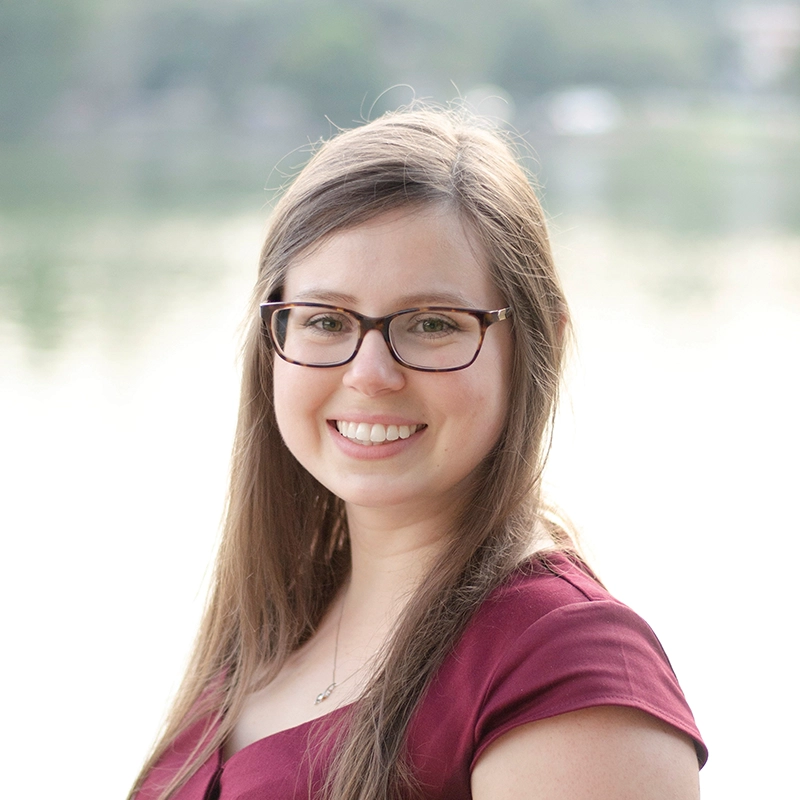
Whitney Doyle has spent her life turning personal experience into systems-level change. Like many children who received care through Shriners Hospital, Doyle felt the pull of the O&P profession long before she entered the workforce. Amniotic band syndrome prevented her right arm and left leg from developing fully. “I don’t have an arm and a leg,” she says. “My arm is still an arm and my leg is still a leg. They just look different than most people’s.”
Doyle’s leadership qualities showed up early. In fifth grade, she received Disney’s Dreamer and Doer Award, which honors students who exemplify courage, positivity, and leadership. As part of the award acceptance process, recipients were asked to share what they planned to do when they grew up. Doyle’s mother planted the idea of prosthetics early on. “My mom knew that the world of prosthetics would be my world for my entire life,” Doyle says. “She wanted me to have all the tools I needed to take care of myself.”
Taking her mother’s words to heart, Doyle built her academic path intentionally, aligning her high school and junior college coursework with the requirements for Saint Petersburg College’s O&P program. Out of 24 students, she was one of only a few prosthesis users and the only one with an upper-limb difference. She did not just learn the work; she innovated within it. She developed her own method of casting patient models, describing it as an intimate and somewhat messy process. By the end, Doyle’s scrub top would be covered in plaster. People like us often have to become masters of improvisation, and Doyle is an expert at it.
After completing the O&P program, she faced a nine-month search for a residency. When she finally found one, Doyle noticed her patient care load was lighter than that of other clinicians. She was often used in a marketing capacity. At times she felt like a “trophy clinician,” yet she did not let that limit her. Instead, she began to carve out a bigger role for herself, one that connected her lived experience with far-reaching changes in care delivery. She was drawn to the disability community, where pride and identity take center stage, and she began using her skills in a new way.
Doyle’s heart gradually pulled her toward the nonprofit world, but her focus never drifted from O&P. Like the quilt she recently completed for her first child (born last October), she stitched her knowledge, experience, and passion into a comfortable fabric.
Today, as the Amputee Coalition’s director of operations and capacity building, Doyle leads efforts to improve how people with limb difference and limb loss are treated and supported, wherever they are in their rehabilitation journey and whether or not they use a prosthesis. As a certified prosthetist, she ensures that lived experience remains at the heart of the profession, shaping the future of the field from both inside and out.
Maggie Baumer: A Perfect Fit
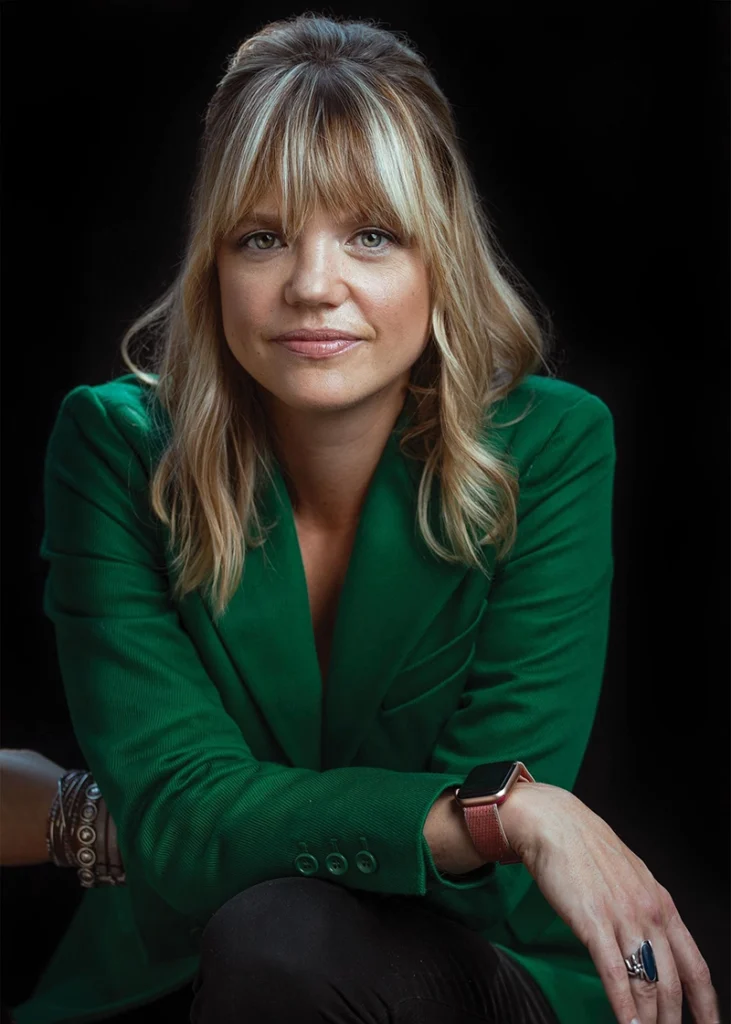
Because Doyle has used prosthetic technology her whole life, she began gravitating toward the O&P profession in childhood. For others, that process comes later in life, after they’ve already launched a career. That was the case for Maggie Baumer, who lost her left arm below the elbow in a traumatic accident in her early 30s.
Immediately after completing her BA in clinical psychology, Baumer spent two years working in an inpatient psychiatric ward. “It was there that I learned how to be with people in a tough time,” she recalls. That inspired her to enroll in law school, where she focused on health law. Along the way Baumer worked as a legal assistant at a firm specializing in employer-based immigration visas.
As important as that work was, it didn’t spark the feeling that she had found “her thing.” That didn’t happen until 2012, when Baumer lost her arm and began dealing with the health system as a patient. It took her more than a year to obtain her first prosthesis. “Self-advocacy was my full-time job,” she says. “I remember thinking, ‘This would be really hard if I didn’t have a background in both law and healthcare.’”
True to her nature as an advocate, Baumer began envisioning ways to use her professional training and lived experience to help other patients navigate their care. She brought a proposal to her surgeon, but the hospital’s bureaucracy made it difficult to create the position she wanted. Her surgeon suggested she reach out to prosthetic companies, and in 2014 Baumer landed a job at Hanger Clinics. After several promotions, she now works as Hanger’s leader of enterprise patient advocacy.
That’s been “her thing” ever since—an ideal outlet to use her legal background, patient perspective, and communication skills to identify gaps, improve support systems, and advocate on a broader scale.
Mike Benning: Building Relationships
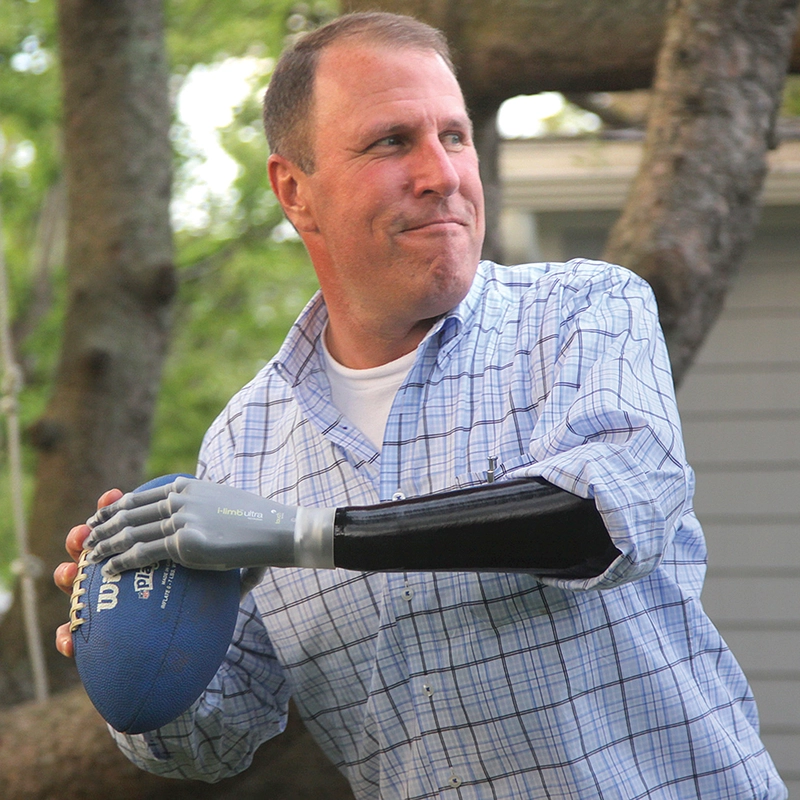
One of Baumer’s early mentors at Hanger was Mike Benning, a fellow upper-limb prosthesis user who was then working in the company’s business development department. Benning assured Baumer that her voice and perspective were not only welcome but essential within the O&P industry.
Benning lost his arm to cancer in 1979, when he was just 14 years old. At the time of his diagnosis, the National Institutes of Health (NIH) was studying the benefits of amputation versus radiation therapy and chemotherapy. Benning chose amputation. “I didn’t want the threat of cancer hanging over my head,” he explains.
Early post-operative prosthetic options were limited in those days, but an innovative NIH occupational therapist fit Benning with a makeshift device just two weeks after surgery. That rapid-response approach to upper-limb rehabilitation eventually gained widespread acceptance, especially in light of a 1984 paper that identified the first 30 days after amputation as the “Golden Period” for initial fitting of an arm prosthesis. Benning continued to work with the same OT for the next 15 years, while staying with his first prosthetist at Hanger Clinic for nearly two decades.
Growing up in a golfing family, Benning dreamed of winning the British Open. He did end up winning some major tournaments, including back-to-back Society of One-Armed Golfers World Championships in 1993 and 1994. His knowledge of the game and communication style helped him excel as a sales representative for a golf company. But after more
than 20 very successful years, he was ready for a change. In 2012, he approached his prosthetist and asked if the clinic had a sales team.
“In this role,” Benning points out, “the product is your practitioners that you are brokering relationships for.” As a device user, he adds, “I speak the language. I walk the walk.”
Today he works as director of sales and marketing for Point Designs. His journey reflects how lived experience can open doors to unexpected leadership roles in O&P.
John Arnold: Seeds of Knowledge

John Arnold’s professional path began not in sales or advocacy but in the rehab clinic. He describes his rehabilitation following a traumatic above-knee amputation in 2002 as “positive,” crediting support from family and friends, talented surgeons, and a prosthetist with a strong ability to listen. “My prosthetist let me into the lab,” Arnold says, and that gave him an understanding of how his prosthesis was actually created.
It also motivated him to get serious about his education. Prior to his accident, he says, “I wasn’t a great student and wasn’t preparing for college. I had a construction job lined up right after high school.” After his accident, John connected with his state’s vocational rehabilitation program. With their support, he went on to college, graduating pre-med while he worked part-time as an O&P technician.
“My parents were shocked when I first told them about my plan to attend Northwestern University for their prosthetics program,” Arnold laughs. But he had found his life’s work. After graduating, he worked for an O&P company for 17 years before opening his own clinic, Mosaic Prosthetic Solutions, in October 2024.
Arnold knew that most people have “negative feelings” when the topic of amputation comes up, and he wanted to show that it doesn’t have to be that way. “Having the right prosthetist,” he says, “can make all the difference.”
His time as a technician sharpened his problem-solving skills, and being a prosthesis user helps him build trust with patients, who, he notes, “look up to me.” But Arnold considers personal experience with limb loss as the cherry on the cake. “What’s more important are listening skills, hand skills, and knowledge,” he says. “I know plenty of amazing prosthetists who aren’t amputees.”
Even so, many amputees feel there’s an unspoken benefit to receiving care from a prosthetist who lives with limb difference or limb loss. Yet there’s no easy way to filter for this quality when searching for a provider. The only way to do so is by digging through clinics’ websites one by one. If there’s an amputee prosthetist on staff, it might (but might not) be mentioned on the “About Us” page or appear in a photo. That gap in visibility is sometimes exactly what drives someone with lived experience to become part of the profession.
Karon Bullock: The Disability Doula
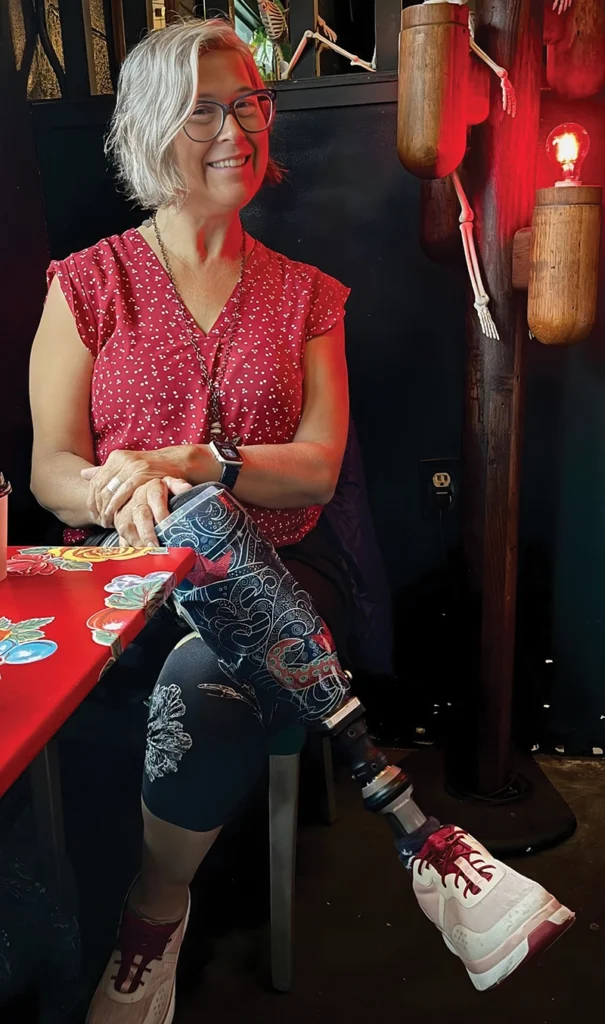
For Karon Bullock, limb loss came at the end of a long, ever-evolving mobility journey. She was diagnosed with severe rheumatoid arthritis in the 1990s, before the development of the “miracle treatments” we see today. Her doctors were often astonished at how progressive her condition became, slipping in comments such as: “We’ve never seen damage like this before.”
Bullock spent years consulting with specialists, seeking solutions that could keep her moving and reduce her pain. She saw firsthand how fragmented her medical care felt, and how poorly it integrated with work, social structures, and other factors in patients’ lives. She also found that medical language is inaccessible for most patients, full of complex terminology that Bullock (who has a background in science education) fully understood, to her care teams’ surprise.
Watching these patterns emerge in her own care, Bullock realized, “I’m not the only one falling through the cracks.” That realization left her with two choices: do nothing, or use her knowledge and personal experience to work for change. She chose the latter. As the director of education and programming for Disability Advocacy Solutions, Bullock serves as a kind of disability doula, working to demystify the experience of living with medically complex conditions. She helps patients untangle the logistics of employment, education, and government programs, which Bullock likens to “writing poetry while running from a bear.” At your weakest moment, she says, “you’re required to have advanced cognitive awareness.”
Rheumatoid arthritis eventually resulted in below-knee amputation of one of Bullock’s legs, and it now threatens the other. As a user of a prosthetic limb, she uses her free time to advocate for the Amputee Coalition, attending congressional hearings to support funding for programs that serve people living with limb loss and limb difference. She shares her story to remind lawmakers that behind every policy decision are real people navigating systems that are often difficult to access. Bullock’s advocacy is driven by the belief that no one should have to fight alone for the care and resources they deserve.
An Army of Advocates
In reviewing my notes from all these interviews, one major pattern stood out: The empathy and perspective gained from lived experience of limb loss often fuels a desire to improve care for others. I and all of my sources share a passion for making O&P care more accessible, removing barriers, sharing knowledge, and using our voices to advocate for change that reaches far beyond ourselves.
I know this motivation isn’t exclusive to the O&P profession. People throughout the limb loss and limb difference community find ways to help each other. There’s an army of amputee advocates out there, taking on challenges large and small. No matter how complicated these efforts can be, they’re worth it. Once we’ve climbed the ladder of recovery, we should hold it steady for those who are just beginning the climb.
Cutting Both Ways
Lived experience with limb loss can be both a gift and a burden for O&P professionals. It offers an understanding that can’t be taught, and that yields definite advantages. Yet it also brings complexities and a sense of responsibility that can make the work more difficult.
THE INSIDER’S ADVANTAGE
- We understand the care process from the user’s perspective, allowing us to interact with device users and colleagues from a place of authenticity.
- Our lived experience can be cathartic for us, empowering for others, and valuable for the companies that employ us.
- We often gain early access to new technology and innovative design options.
- Our technical understanding lets us play a major role in customizing or fine-tuning our own prostheses.
- Working in the field may reduce out-of-pocket costs and offer better access to high-quality devices.
INSIDE, IT’S COMPLICATED
- Balancing the roles of professional and device user can blur boundaries. We may downplay our own needs while prioritizing the needs of others.
- We carry the weight of representation. We’re seen as spokespeople for both our companies and the O&P field as a whole.
- People sometimes make awkward assumptions about what we “should” wear or use, which can feel intrusive.
- It can be challenging to switch from colleague to patient when receiving our own care, especially when power dynamics shift in the fitting room.
- These advantages can create feelings of guilt or tension, because we know how many amputees lack access to good care.