
How one advocate is helping those with limb loss navigate the journey.
by Kim Ousley
The first time Jane Rogers flew using a wheelchair, she wasn’t prepared for what would happen in the TSA line.
As she waited for precheck, a stranger spoke up. “Just because you’re in a wheelchair doesn’t mean you should have special privileges to go ahead in line.”
The comment was shocking. Rogers was embarrassed, fighting back tears. On another trip, an airport employee accidentally tipped her out of her wheelchair, causing physical pain and reinforcing just how vulnerable travel could feel.
For Rogers, those early experiences weren’t just uncomfortable—they were a turning point.
“I’ve had fibromyalgia for more than nine years, and I used to work full time,” she said. “I worked with elderly people and put in really long hours.” Over time, her health declined. One of her legs began to drag when she walked, and after a long, two-year medical journey, she was diagnosed with fibromyalgia.
The shift was devastating. Suddenly, daily life looked different. Travel—something she loved—felt uncertain, even intimidating.
“I wanted to say to that rude lady that I’d rather be able to stand in line than be stuck in this chair,” Rogers said.
But instead of stepping away from travel, Rogers leaned in.
Inspired by YouTube videos and her own experiences navigating airports, she began gathering information—everything she wished she’d known before that first flight. What started as personal research quickly grew into something more.
Today, Rogers is building her website, Accessible Travelling, a resource designed to make travel with a disability less stressful and more accessible. Her goal is to offer practical tools for navigating everything from airport security to hotel stays, public transportation, and beyond.
While the site is still in the works, she’s actively sharing resources on her Facebook page, Accessible Travelling, where a growing community is already turning to her for support.
Her work is rooted in one simple idea: no one should have to figure this out alone.
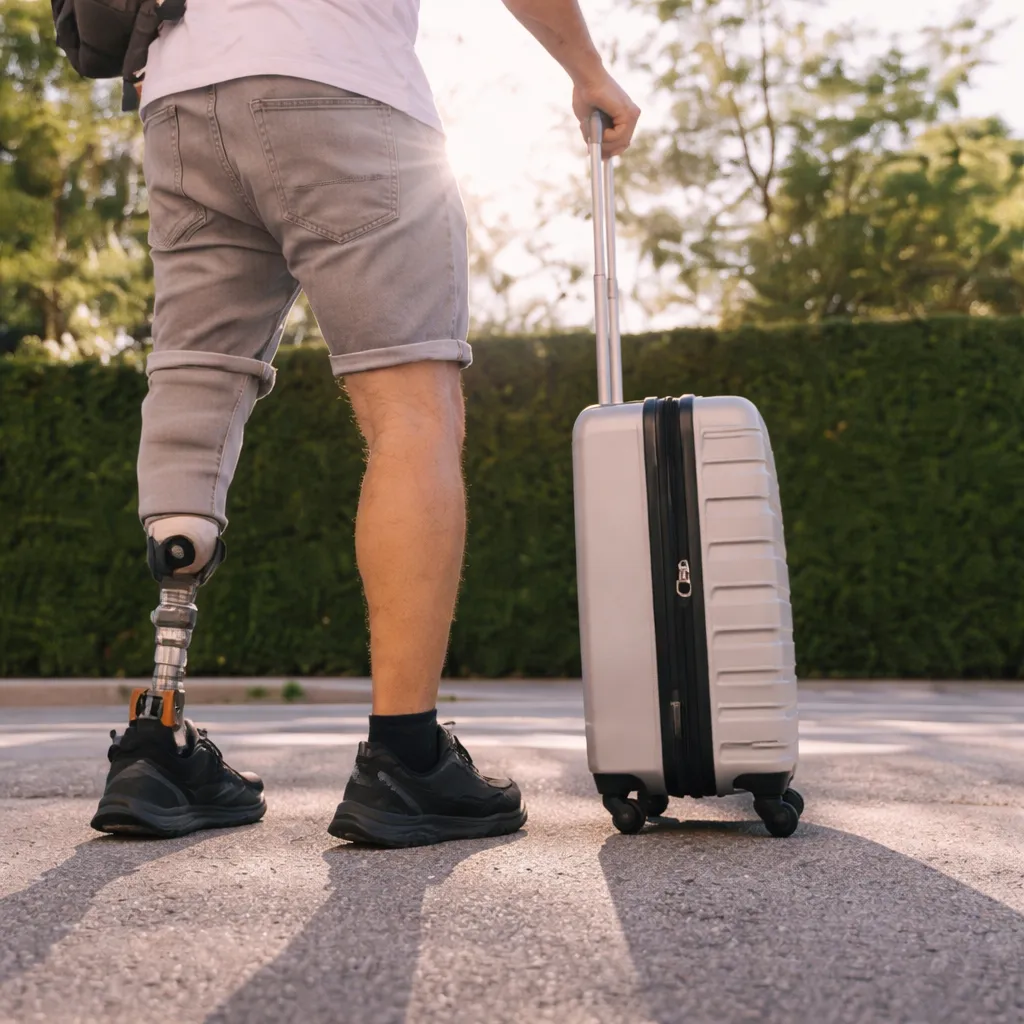
For amputees and others traveling with medical devices, preparation can make all the difference. From navigating security screenings to managing comfort in-flight, small details can have a big impact on the overall experience.
Here are 10 of Rogers’ key tips for traveling as an amputee:
- See your prosthetist first: Schedule a checkup to ensure your device is in good condition, and clean it before traveling.
- Request specialized assistance: Arrange wheelchair assistance or early boarding in advance with your airline or transportation provider.
- Carry essential documentation: Bring a doctor’s note, prescriptions, and contact information for your prosthetist.
- Pack a repair kit in your carry-on: Include extra socks, liners, and a small toolkit—never check these items.
- Arrive early: Security screenings for prosthetics can take additional time.
- Dress strategically: Wear clothing that allows easy access to your residual limb and prosthesis if screening is required.
- Choose seating carefully: Aisle or bulkhead seats can offer more space and flexibility.
- Manage limb volume changes: Cabin pressure can affect fit—bring shrinkers or extra socks to adjust as needed.
- Stay hydrated and pace yourself: Avoid excess salt, drink water, and build in time to rest.
- Research local resources: Identify prosthetic clinics or support services at your destination in case of emergency.
For Rogers, sharing this information is about more than logistics—it’s about restoring confidence.
What once felt overwhelming and isolating has become a way to support others, helping travelers move through the world with greater ease, dignity, and independence.