
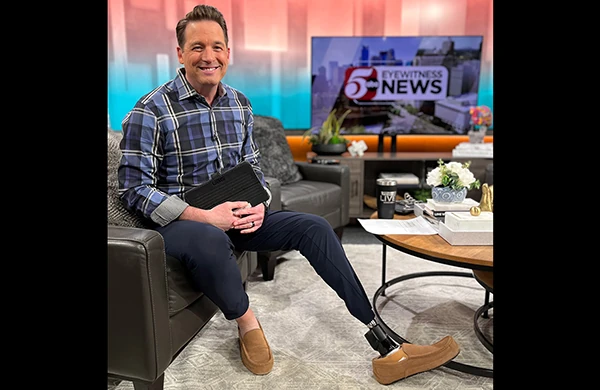
Getting a first prosthesis can feel overwhelming. There are appointments, unfamiliar terminology, and major decisions to make—often while someone is still recovering physically and emotionally from amputation. Looking back, Minnesota television news anchor Chris Egert says one of the biggest things he wishes he’d known wasn’t about prosthetic technology itself. It was what questions to ask.
Egert, a morning anchor for KSTP in Minneapolis–St. Paul, underwent a left foot amputation in 2017 after complications from a revision ankle replacement surgery led to a severe infection. A former college basketball player who had endured years of chronic ankle pain and more than 20 surgeries, he thought he’d done enough research before meeting with his prosthetist.
Today, he realizes there were options he never knew to explore.
“I didn’t realize it was possible to demo different devices,” Egert said. “I know now that this is something you can request, and most companies are more than happy to accommodate.”
Instead of assuming one prosthetic foot was much like another, Egert now encourages new amputees to ask how different components match their lifestyle and goals. Questions about weight, waterproofing, charging requirements, and performance during specific activities can all help shape a prosthesis that better fits everyday life.
He also remembers that first prosthetic appointment as a blur.
Recovering from surgery and managing pain medication made it difficult to absorb everything happening during the fitting process. In hindsight, he wishes he’d asked more questions—not because his clinicians failed him, but because he didn’t yet know what was possible.
“I always felt my clinicians did a great job of working with me,” he said. “But I wish I’d have known the right questions to ask.”
Like many new amputees, Egert’s first weeks with a prosthesis weren’t easy. He compares the experience to wearing “the most uncomfortable pair of leather shoes you have ever worn, with no socks on, and going on a 10-mile run.”
Still, the adjustment was worth it.
For the first time in three decades, he was able to walk without constant pain. As his residual limb changed and his prosthesis was refined, his mobility eventually exceeded his expectations.
Along the way, he also developed a greater appreciation for the craftsmanship involved in prosthetic care—and the importance of speaking up whenever something doesn’t feel right.
Blisters, skin breakdown, and socket discomfort have been recurring challenges throughout his rehabilitation. Those experiences taught him that successful prosthetic care is a partnership.
“I’ve found clinicians will do everything they can to help you get comfortable, but you have to empower yourself to ask for help,” he said. “Knowing that it’s okay to advocate for yourself is the biggest thing.”
That philosophy is also behind My Prosthetic Priorities, a new free online resource created by prosthetics manufacturer Blatchford in collaboration with amputee organizations and clinicians. Designed to complement—not replace—clinical care, the platform helps lower limb amputees understand the rehabilitation process, identify personal goals, and prepare questions before meeting with their prosthetist.
The resource includes what organizers describe as the first decision-support aid developed specifically for lower limb prosthetic users, encouraging patients to think about their priorities before making decisions about their prosthetic care.
For Egert, access to information can make all the difference.
“As a journalist, information is power,” he said. “I learned most of what was important by talking to other amputees.”
His advice to anyone approaching their first prosthetic appointment is simple: be patient, do your homework, and don’t be afraid to ask questions.
After all, a prosthesis isn’t just a medical device—it’s something that will shape how you move through daily life. Taking the time to understand your options can help ensure it fits not only your body, but your goals as well.