

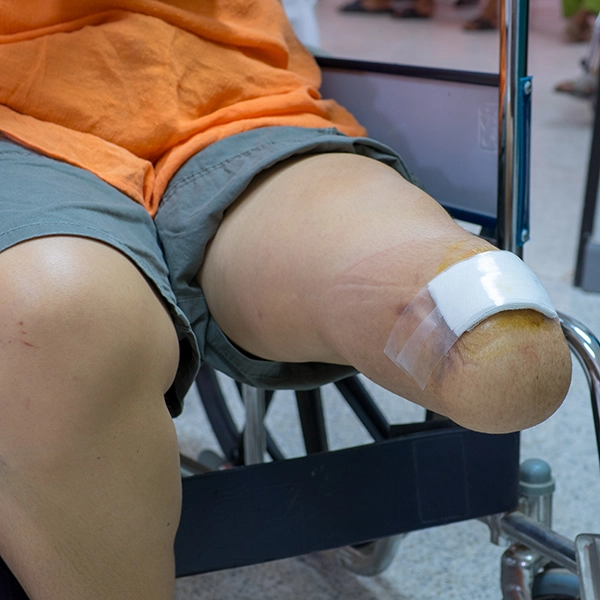
How long does it really take to recover from an amputation? It sounds like a straightforward question but a new study suggests science may not be following people long enough to know the answer.
A recent review in Archives of Rehabilitation Research and Clinical Translation examined how recovery has been measured over time after major lower-limb amputation. What researchers found was a field heavily focused on the beginning of the recovery process, with considerably less attention paid to what happens months or years later.
Only 21 percent of 85 different studies followed participants beyond the first year after amputation. That leaves a potentially important gap in our understanding of recovery, particularly because adapting to limb loss rarely follows a tidy clinical timeline.
In the weeks and months after an amputation, there is plenty for researchers and clinicians to measure. Eventually, though, formal rehabilitation ends. Life after amputation does not.
While researchers identified 174 different outcome measures used to track recovery, some aspects of life received more attention than others. The researchers found gaps in measures related to participation in everyday life, including returning to work and social reintegration.
Being able to walk a certain distance or perform a task in a rehabilitation setting can tell clinicians something important about physical recovery. It doesn’t tell them how someone is navigating a workplace, maintaining relationships, participating in a community, or adapting as needs change.
The review focused specifically on nontraumatic major lower-limb amputations, which are often associated with conditions such as diabetes and vascular dis-ease. Its findings therefore shouldn’t be assumed to represent every person with limb loss. Instead, the study highlights what researchers still need to learn.
Longer-term studies could help clinicians better understand how mobility, health, prosthetic use, emotional well-being, and participation change over time. They could also reveal challenges that aren’t apparent during the relatively brief period when someone is receiving intensive rehabilitation. Perhaps most importantly, following people longer could broaden the definition of a successful recovery.
The first steps after an amputation matter. But there is also the life that comes afterward. Understanding that part of recovery requires researchers to keep watching after rehabilitation ends.
To read the study, go to tinyurl.com/ypeuynmp.