

For people who use prostheses, sometimes the most useful winter solutions aren’t the ones you’ll find on a seasonal gear list like hand warmers and puffer coats, but instead those that help you get from point A to B safely.
From boots that are easier to get into to traction devices to a few clever tricks from other amputees, Amplitude’s here to help get you winter ready.
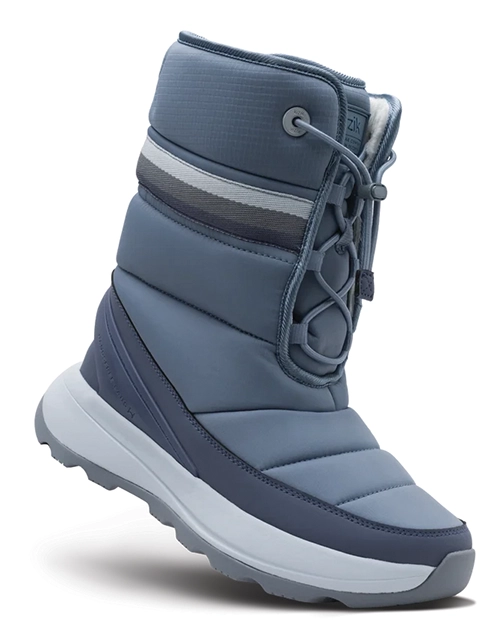
Look for Boots That Work Differently
For some lower-limb amputees, getting a prosthetic foot into a traditional winter boot can be a challenge. That makes the way a boot opens almost as important as warmth and traction.
One option worth a look is Kizik’s Juno 2 High. This winter boot isn’t designed specifically for amputees, but its hands-free Flex Arc heel compresses as the wearer steps into the boot, then springs back into place. It also offers 400 grams of insulation, a lugged rubber outsole for traction, and a removable insole.
Other useful features to look for include side zippers, wide openings, adjustable closures, and removable insoles. BILLY Footwear makes a children’s Ice Boot with a wraparound zipper that allows the upper part of the boot to open, making the boot much easier to get into.
Of course, easier entry doesn’t automatically mean a boot will work with a particular prosthesis. Winter boots often have thicker soles or different heel heights than everyday shoes, which may affect prosthetic alignment, balance, or comfort. If switching footwear makes your prosthesis feel noticeably different, check with your prosthetist.
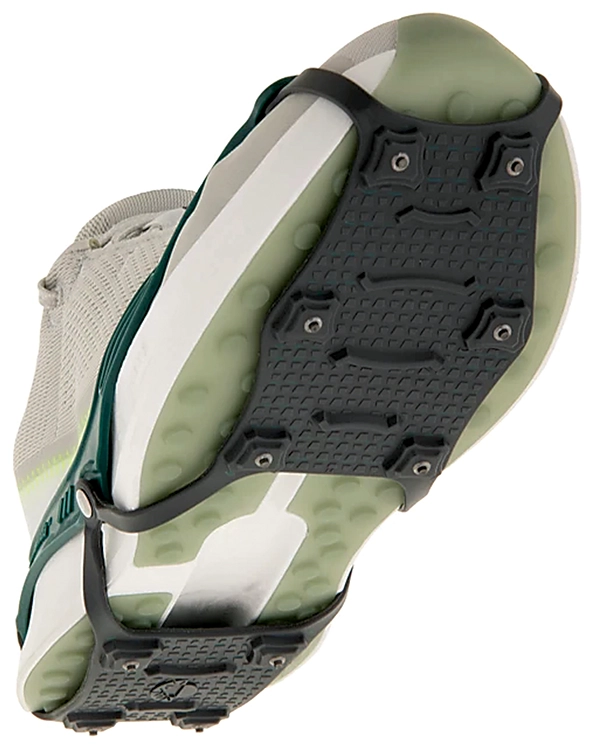
NANOspikes
Get a Grip
Sometimes the best winter upgrade isn’t a new boot at all.
Slip-on traction devices fit over shoes or boots and can add grip on packed snow and ice. Products such as Yaktrax and Kahtoola NANOspikes use coils or metal spikes beneath the foot to provide additional traction on slippery surfaces.
The idea extends beyond footwear. Ice tips and other traction attachments are available for canes and crutches, adding another point of contact with slick ground. Hanger Clinic recommends considering shoe grips, prosthetic cleats, and spiked bottoms for mobility aids when conditions get slippery.
Think Beyond the Shoe Store
If a favorite boot is almost workable but the prosthetic foot simply won’t slide inside easily, some amputees have found an old-fashioned workaround: placing a thin plastic bag over the foot shell to reduce friction as it slides into the boot. Others have taken favorite boots to shoe-repair shops to have a zipper or larger opening added.
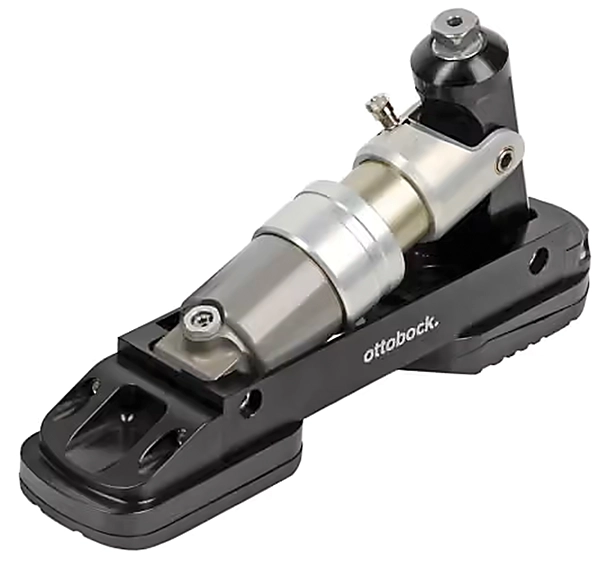
by Ottobock
Want to Play in the Snow?
For amputees who would rather carve through winter, specialized gear goes considerably further.
Ottobock’s ProCarve is a prosthetic foot designed specifically for skiing and snowboarding. Depending on the setup, it can connect directly to a ski binding or be used with a foot shell shaped to fit into a snowboard boot.
Winter may require a few adjustments. But the goal isn’t simply getting through it. It’s finding what helps you get out into it.
Watch Your Traction
Snow and ice can change how your prosthesis interacts with the ground. Before heading out, check your footwear and traction devices. On slick winter days, give yourself a little grace with time. There’s no need to rush.
Product images courtesy of kizik.com; kahtoola.com; ottobock.com. Featured image: SockaGPhoto/stock.adobe.com