WORDS Emily Chen-Newton
I heard one festival-goer joke that it was “an act of God to get here.” But that didn’t stop producers, directors, and athletes with disabilities from traveling to Telluride, Colorado, for Mountainfilm, where this year’s festival featured about half a dozen films centered on adaptive sports and disability.
Since 1979, Mountainfilm has drawn conservationists and mountaineers to the remote mountain town, showcasing “documentary films that celebrate adventure, activism, social justice, environment, and indomitable spirit.” In recent years, more outdoorsmen with disabilities and women have been in the mix.
As an adaptive sports reporter with a disability myself, I came to Mountainfilm looking for stories of adventure and exploration from those with limb-loss, disabilities, and other complex medical conditions, as well as stories of caretaking and adaptation.
After a turbulent puddle-jumper from Denver and a couple of hours in a friend’s truck, I arrived for the festival. With the schedule in hand, I walked around the small town dotted with high-end outdoor apparel stores and Victorian architecture, mapping out which films I’d see over the next three days. Some films on the schedule had an obvious focus on disability and limb loss, such as Mike Schultz’s Built to Move. But others, like Hello, Beautiful, snuck up on me, exploring resonant themes such as self-love and acceptance.
The list I ultimately compiled for Amplitude readers includes eight documentaries that tell the stories of those who have lived through great bodily change or supported a loved one through that change.
Built To Move
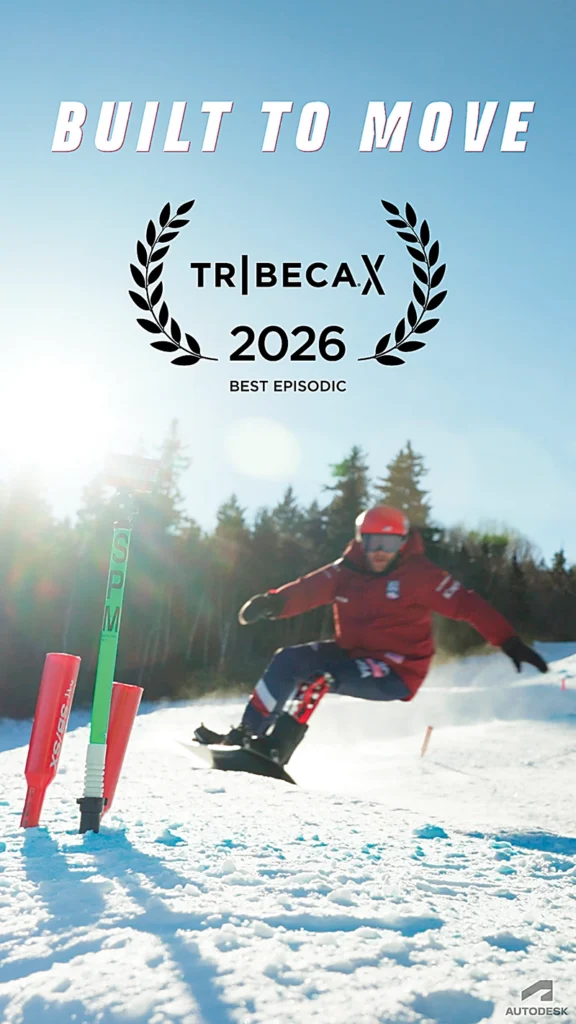
Watch this short documentary series for a look into the mechanics of “Monster Mike,” a veteran Paralympic snowboarder who’s used his limb loss to help others ride faster and harder on powder. Schultz retired from the sport in 2026 with a legacy beyond his medal count. He’s the founder of BioDapt, a company making prosthetic components for high-impact sports like snowboardcross and dirt bike racing.
Built to Move is a three-part series, and after Mountainfilm, the series went on to win an award for episodic projects at the Tribeca Film Festival. Schultz told Amplitude magazine he hopes the recognition from that award helps bring the team closer to finishing their feature-length film.
One of his favorite things about the project, Schultz says, is that it shows how his fellow Team USA Paralympians interact with him as a teammate, but also “as the designer and manufacturer of the prosthetic equipment I build for them at BioDapt.” Though he retired from Paralympic snowboarding, the impact of what he has built will outlast his last run at Milan Cortina.
Right To Risk
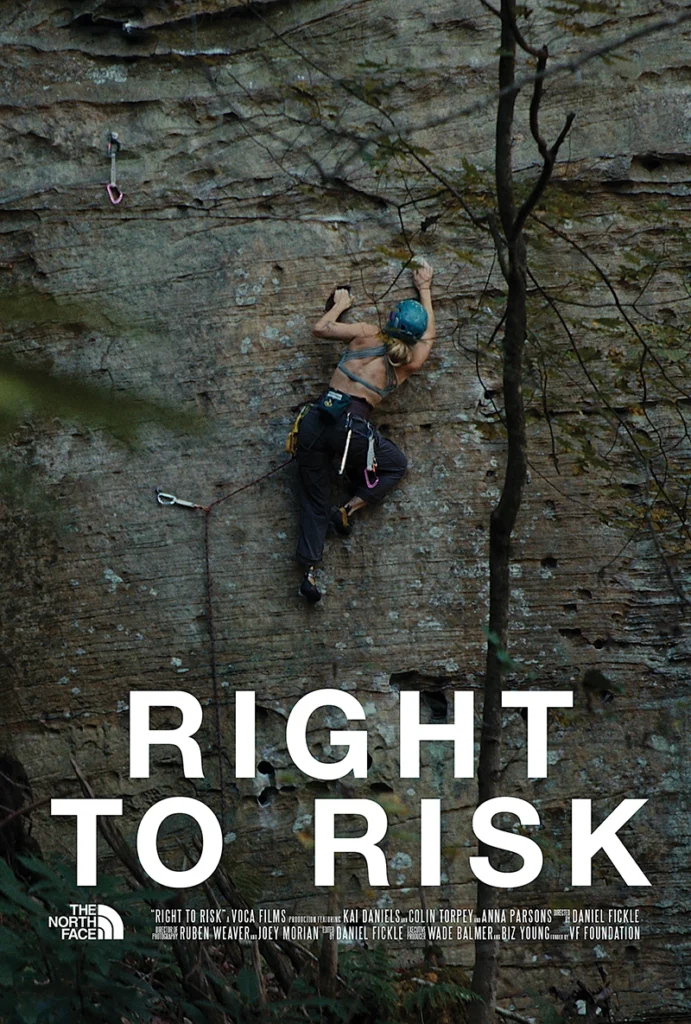
This film gets at the heart of an idea I’ve heard repeated many times around campfires or at competitions as I’ve spent years covering gritty athletes and adventurers with disabilities. Right to Risk documents a festival for rock climbers with disabilities as they have gathered every October for five years in Kentucky’s Red River Gorge.
This short film not only tells their story, but it showcases their ethos—that we all have the “right to risk” even if we have a disability.
Watching this, you’ll get your fill of autumnal colors and shots of athletes scaling up golden rocks. Southern Appalachia shows up beautifully, as the kinship that’s formed between the local community and the adaptive climbers is woven throughout the film.
Best Day Ever
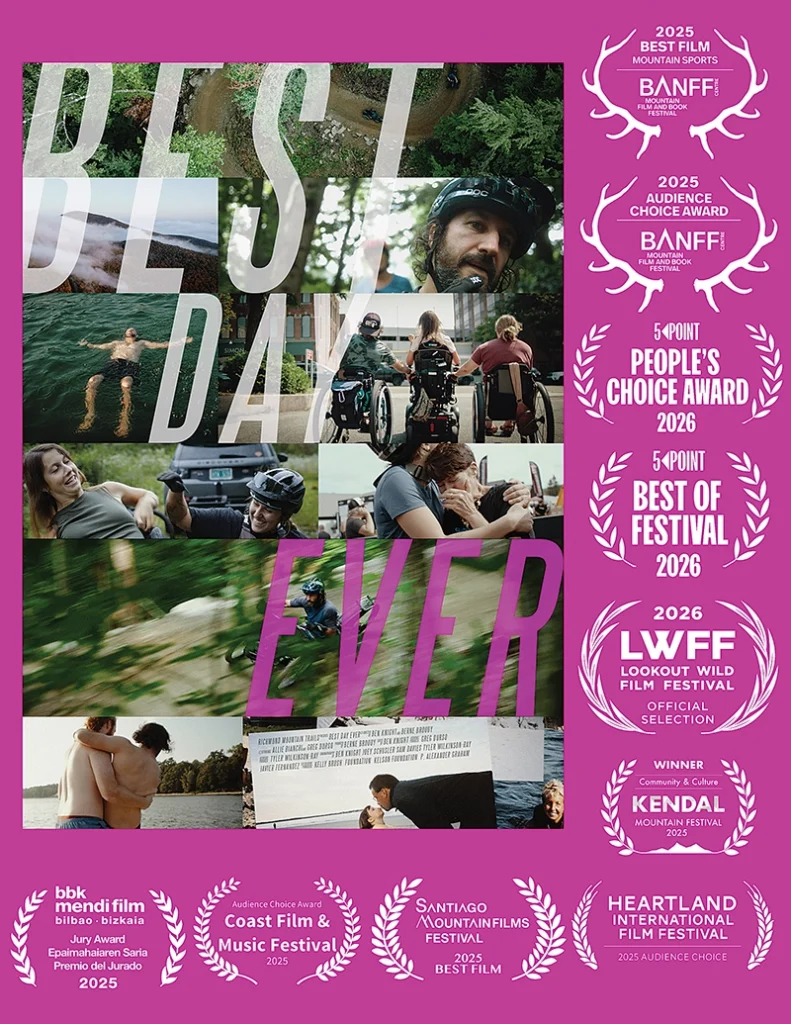
While the film follows two individual athletes, this documentary is about the power of community. The disability experience is often shaped by the environment, and this film shows how that environment can be changed through willpower, sweat equity, and roughly 2,000 hot dogs.
After moving to Vermont, adaptive mountain biker Greg Durso quickly realized that most of the trails were about 6 inches too narrow for his adaptive rig. To Berne Broudy, cofounder and president of Richmond Mountain Trails, this seemed like a fixable problem. Led by Broudy, 200 volunteers worked over 5,000 hours and ate more than 2,000 hot dogs.
Best Day Ever is about the trail system and the riders, but it’s also about bikes, a machine that makes you feel “like you can fly,” as a bicycle anthropologist featured in the film says. The team behind Best Day Ever has also developed a YouTube series called “How to Build Adaptive Trails” with the hopes that others around the country will follow suit.
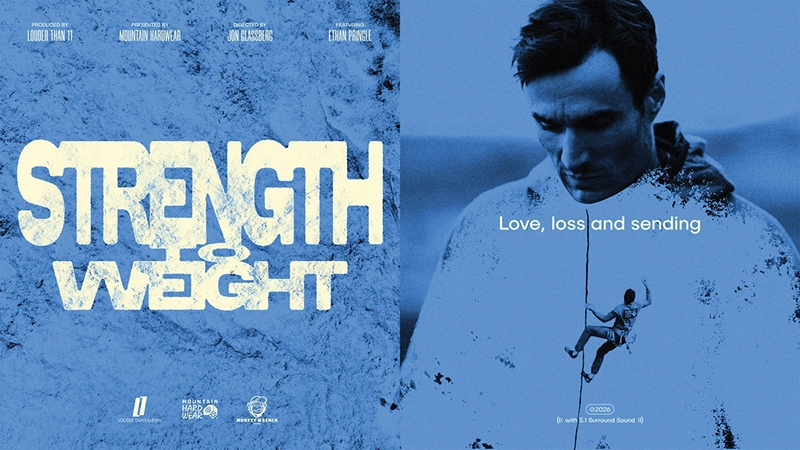
Strength to Weight
This is one of the films that snuck up on me at this festival. Masquerading as a climbing film, it speaks to an experience of disability from a caretaking lens.
Strength to Weight watches professional climber Ethan Pringle adapt to being a caretaker for his father who suffered a stroke, leaving him paralyzed on one side.
When Pringle reaches for his next handhold, screaming halfway up a climbing route, you get the feeling that he’s crying out for something more than the climb. Anyone who’s had the responsibility (and honor) of caring for a loved one will understand how Pringle wrestles with feelings of guilt when he is away from his father. Even while traveling up and down the California coast in pursuit of various ascents, his father is always on his mind.
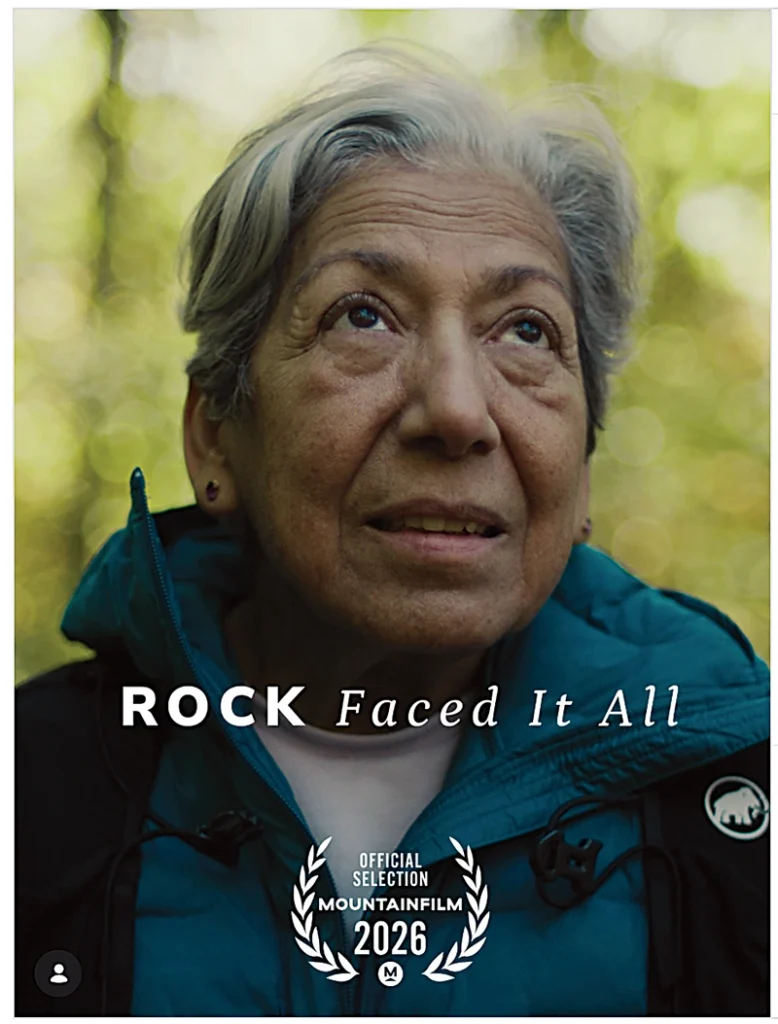
Rock Faced It All
This film is a mother-daughter take on disability and aging. It gives audiences a glimpse at the growing body of evidence suggesting rock climbing might help those with Parkinson’s disease wrapped in the package of Teresa Bennett and her loving family. Bennett got her start climbing with the program UpENDing Parkinsons, and the short film follows her to a USA Paraclimbing Nationals competition.
While on stage at the Mountainfilm premiere, Bennett told the theater she doesn’t know what the future holds. “As long as I am climbing, I’ll be ok.” The festival emcee assured her that someone in the Colorado crowd would take her out climbing in the Rockies if she wanted. There was a warmth you could feel in the theater and on screen between Bennet and her daughter, Clare Bennett, who codirected the film and climbs alongside her mother.
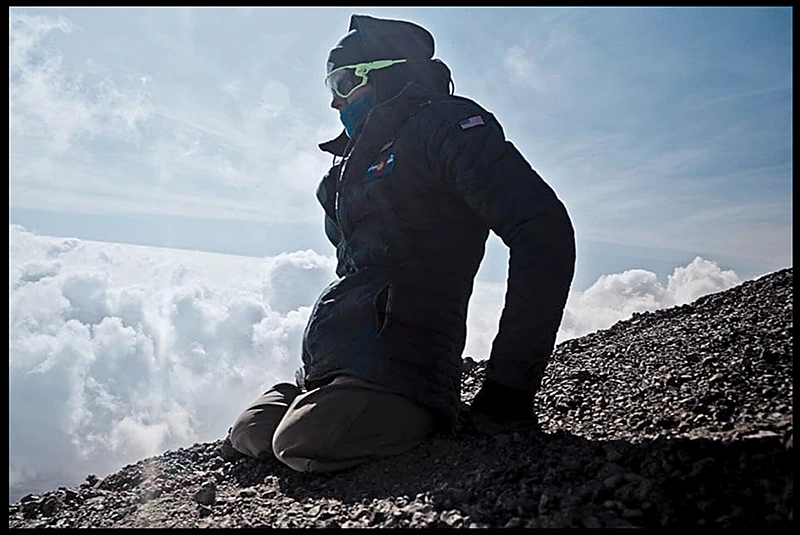
The Ascent
As a reporter accustomed to interviewing sponsored athletes and media-ready Paralympians, I found Mandy Horvath’s honesty and grit in The Ascent a refreshing contrast, moving this film to the top of my watchlist.
Horvath is a bilateral above-the-knee amputee who holds multiple world records for scaling monuments without prosthetic legs. The Ascent documents her greatest achievement to date: her ascent of Mount Kilimanjaro in 2021. Horvath’s legs were amputated after she was struck by a train on a night that is still a blur. She believes her drink was spiked that night and is not shy about the anger she holds onto. The film follows her working through this anger and learning to trust the porters and guides who support her on her Kilimanjaro climb.
While the film centers on her ascent of Kilimanjaro, because she still has so many unanswered questions about the night she lost her legs—the driving force behind her mountain climbing—the filmmakers could not avoid delving into her past. Horvath says she did not set out to make a true crime film, but that is indeed part of what you’ll get when you watch The Ascent.
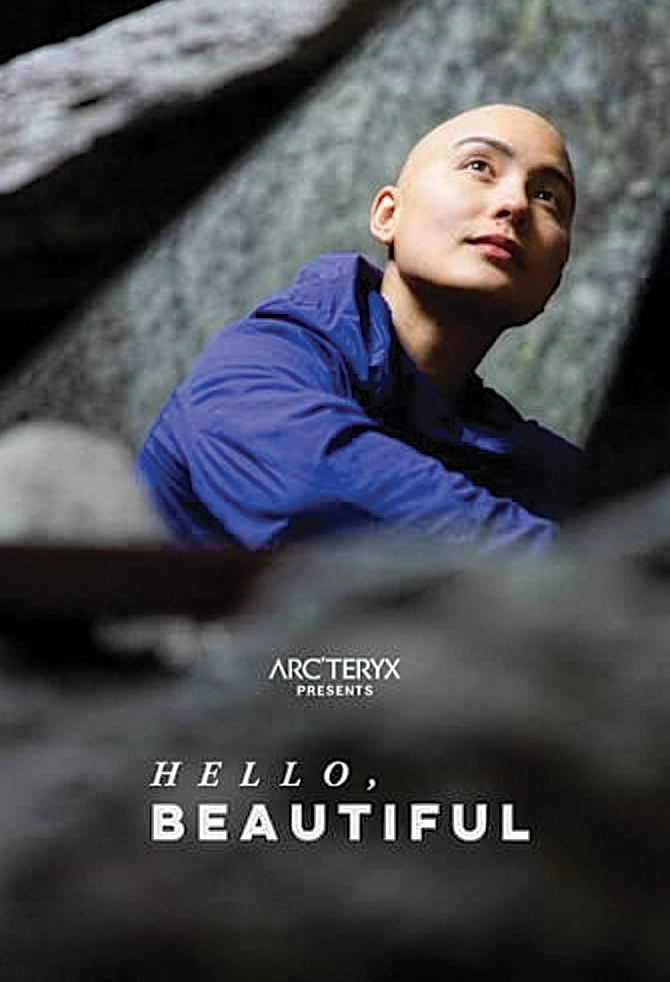
Hello, Beautiful
Professional rock climber Alannah Yip hasn’t lost a limb, nor was she born with a limb difference. But she does turn inward and is forced to confront her longstanding beliefs and beauty standards after developing alopecia in 2023.
Losing her hair to the autoimmune condition challenged Yip’s sense of self, and in Hello, Beautiful, she explains how she began to reclaim self-love across the backdrop of a climbing film.
The film floats along an intricate piano-rich sound score that mimics the climber’s movement on rock and her personal journey.
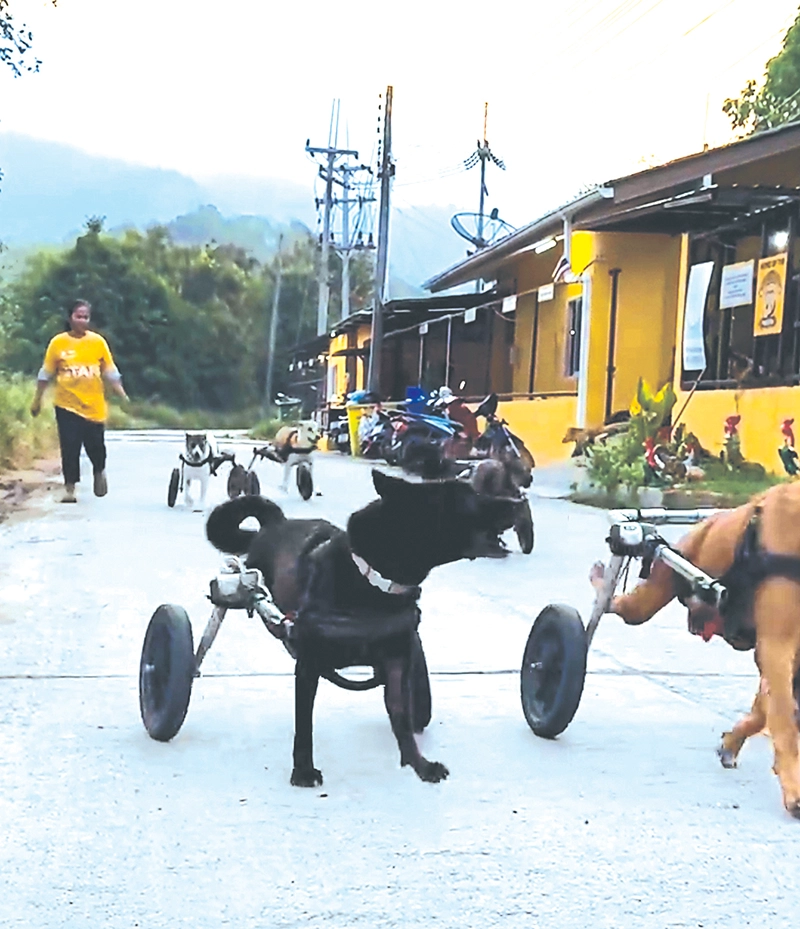
Wheelchair Mafia
Taking place over just 36 hours in a dog shelter outside of Bangkok, this film features a tiny gang of stray dogs with paralysis or other injuries. The mutts are the stars of this documentary, but I included it on my list of films to watch because it’s also a beautiful portrayal of human adaptation. British expat Michael J. Baines builds “wheelchairs” for the dogs, giving them a second chance at life.
The hounds zoom around in their handmade rigs and into the hearts of everyone watching this short film in the theater or on their laptop at home. This touching documentary gives viewers an inside look at what it takes to run the shelter, and what the volunteers and staff get in return.
All the films featuring stories of adaptation I watched at the festival ended with loud applause, some with standing ovations. Even so, the cast and crew behind many of the projects must continue to push to have their films picked up by streaming services. Right now, only some are available to watch in full online. You might be able to catch an in-person screening near you. And with the visibility from events like Mountainfilm—especially for projects like Best Day Ever and The Ascent—that took home festival awards, the films might make it into your living room one day soon.
“We know that time outdoors can be transformative, and everyone deserves the chance to experience that connection,” Mountainfilm’s Senior Programmer Robin Robinson told Amplitude. Robinson says Mountainfilm is proud to “spotlight adaptive athletes, advocates, and stories that demonstrate how nature and the outdoors should be accessible to all.”
Top image: thenatchdl/stock.adobe.com. Movie posters: facebook.com/ryan.suffern; instagram.com/adaptiveclimbersfest; instagram.com/isabelazawist; imdb.com/title/tt41951286; instagram.com/cademartinphoto/reels; imdb.com/title/tt39367709; filmfreeway.com/StrengthtoWeight; icfilmscene.org/film/best-day-ever