

Essential Information About Upper-Limb Sockets
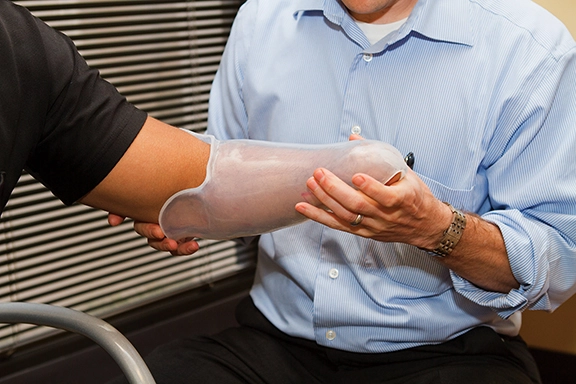
prosthetist and patient. (The socket shown here is a diagnostic
test socket.) All images courtesy of Advanced Arm Dynamics.
It’s not unusual for upper-limb amputees to be a little dazzled by the current array of impressive prosthetic technology on the market. People often get excited about cool apps for programming prostheses, 20-plus grip options, and sleek, cyborg looks in glossy white, black, and silver. Advances like these are giving people better hand function, more natural motion, and, sometimes, more confidence about their appearance. But there’s a lot more to the story, beginning with the foundational component of any prosthesis: the socket.
Building a Solid Foundation
The socket is the connection between your prosthesis and your body. It is the key component in an upper-limb prosthesis and determines its comfort, stability, function, and perceived weight. An important part of the fit of the socket is the residual limb it embraces, which has its own unique shape, length, and contours. The precise interface of the socket and your limb is the single most important factor in acceptance of your prosthesis as an extension of your body. Without a comfortable, well-fitted socket, the technological advantages offered by terminal devices or other components can be lost. Poorly fitting sockets are often the reason people become frustrated and stop using their prostheses altogether. Ultimately, your socket should feel as comfortable as a favorite pair of shoes; anything less than that represents an opportunity for improvement.
Below-elbow amputee Sky Carr is a project manager for a manufacturing company in Texas, as well as a husband and father of three. Like many people who experience limb loss, his primary concern was being able to return to work.
“My first prosthetic device didn’t fit right, and I couldn’t do much with it. I couldn’t lift anything or hardly open it,” he says.
“I had a lot of pressure on the end of my limb with a prominent bone. So I decided to go to an upper-limb specialist. They got me set up with the correct fit, worked around the pressure, and since then it’s been great. The socket is the main thing.”
Feedback + Fit = Function
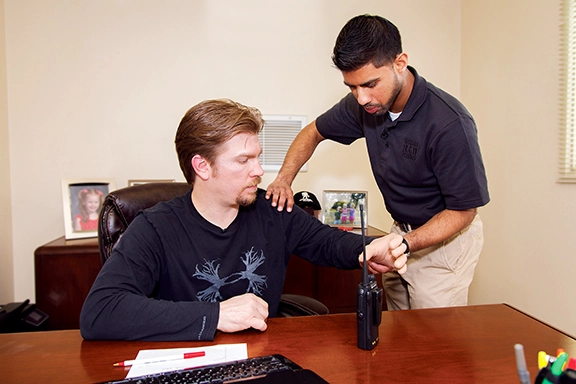
shown here with an occupational therapist at the site.
Creating a socket is a blend of science and art, and should always be a collaborative effort between you and your prosthetist. A successful fitting process involves three elements: a diagnostic phase, a definitive prosthesis, and communication throughout the entire process.
It is essential for the clinical team to understand your needs, goals, and expectations for wearing a prosthesis. What’s most important to you—appearance, going back to work, playing sports? Advocating for yourself and being vocal about your wishes and priorities can lead to a better outcome.
Your prosthetist should explain the range of options that are available, including passive, body-powered, myoelectric, hybrid, and activity-specific devices. Your functional goals, amputation level, and suspension requirements are some of the factors that influence the type of prosthesis that you choose, which, in turn, influences the socket design.
The diagnostic phase includes casting and fabricating a socket; attaching a hand, hook, or other terminal device; and letting you begin to use the prosthesis. This phase involves working closely with your prosthetist and an upper-limb therapist and should include taking the device home for a short time. Your feedback about what feels right and what needs to be changed is essential to getting the best fit.
Some of the key socket considerations your prosthetist should address are comfort, skin protection, donning and doffing, range of motion, alignment, suspension, electrode-to-skin contact, and managing heat and perspiration in the socket. After necessary modifications have been made and your residual limb has stabilized, your definitive prosthesis is fabricated and your prosthetist optimizes the fit.
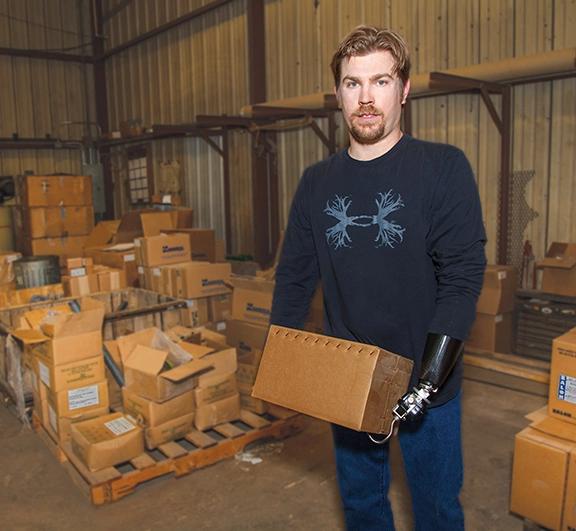
for lifting and reaching while at work.
The material from which your socket is going to be made is another important factor to ask about. The availability of new and better materials has had a positive impact on socket comfort, which enables people to wear their prostheses for much longer periods of time. Advanced sockets, such as those made from composite materials and custom silicones, are ideal for contouring around the underlying bones in the residual limb. These close-fitting sockets have secure suspension, are supple against the skin, and allow for extra cushioning around bony prominences or scar tissue.
Success for the Long Run
With a comfortable socket and good prosthetic function, you’ll probably choose to wear a prosthesis for the rest of your life. So, right from the start, you should understand that a great socket fit doesn’t happen in an instant or last forever. It takes time to become accustomed to the intimate fit of a contoured upper-limb socket. The skin on your arms was not intended to be weight bearing, and by wearing a prosthesis, you are placing unusual stress on the tissue. There should be a breaking-in phase while your arm adapts to the socket and a “wear schedule” that gradually increases how many hours a day you wear your prosthesis. Even after months and years of using a prosthesis, your socket will need periodic adjustments to adapt to natural changes in the shape of your residual limb and to maintain the best fit possible.
If you are experiencing pain or are unable to do the things that are important to you, discuss your concerns with an upper-limb prosthetic specialist. As you problem solve together, you’ll get the support you need, learn about new options, and decide if it’s time to collaborate on a new socket.
BY PAT PRIGGE, CP, FAAOP; MACJULIAN LANG, CPO, FAAOP; AND SHERRI EDGE