

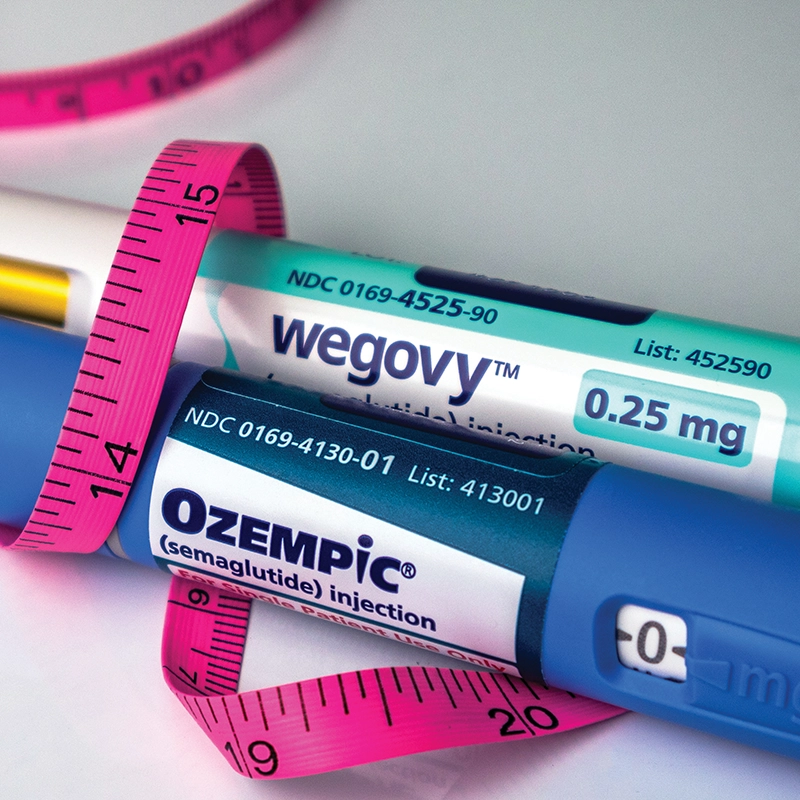
Weight-loss medications known as GLP-1 receptor agonists are changing more than the number on the scale. For many amputees, rapid weight loss can also affect the fit of a prosthetic limb, leading to more frequent socket adjustments, replacements, and clinical follow-up.
During a recent virtual meeting hosted by the Amputees Preparing Amputees for Life support group, board-certified prosthetist/orthotist Cassandra Delgado, clinical director at Coyote Prosthetics, discussed the growing impact these medications are having on prosthetic care.
Originally developed to help people with diabetes manage blood sugar levels, GLP-1 medications have become widely used for weight management because of their effectiveness in promoting significant weight loss. While that weight loss can improve overall health—and, in some cases, reduce the risk of diabetes-related amputations—it also presents new challenges for prosthesis users.
As body weight changes, residual limb volume often changes as well, which can alter the fit of a prosthetic socket. A socket that once fit comfortably may become loose, requiring adjustments or, in some cases, a complete replacement.
Delgado saw the trend in her own practice, including one patient who weighed 330 pounds and needed to lose weight to improve his overall health and his ability to walk comfortably with a prosthesis.
Wanting to better understand what other clinicians were experiencing, in 2025 Delgado surveyed 152 prosthetists. Roughly three-quarters of respondents reported an increase in socket adjustments, warranty remakes, or additional check sockets related to patients taking GLP-1 medications.
The effects can extend beyond the socket. Many prosthetic feet are designed for specific user weight ranges. Significant weight loss may move individuals into a different weight category, making it appropriate to evaluate whether another prosthetic foot would better match their current needs.
Delgado also identified another challenge: education.
“There’s no training for prosthetists or amputees,” Delgado said. “When we go to prosthetics and orthotics school, we might learn about blood pressure medication or diuretics like a water pill and how this affects the client’s volume. But in-depth medication training isn’t part of the curriculum.”
Recognizing that gap, Delgado developed educational presentations for prosthetists to help them understand how GLP-1 medications affect prosthetic fit and how to better support patients experiencing rapid changes in limb volume. Her seminars, offered both virtually and in person, also encourage greater collaboration between prosthe-tists, endocrinologists, bariatric medicine specialists, and other members of a patient’s healthcare team.
For prosthetists, the increased need for adjustments also means more frequent documentation and insurance justification for replacement sockets and components. While these changes can create additional administrative burdens, Delgado believes they also present an opportunity for the profession to adapt.
As GLP-1 medications become more common, prosthetists are gaining a better understanding of how rapid weight loss affects prosthetic care. Greater awareness—and continued education—could help drive new approaches to socket design, clinical care, and interdisciplinary collaboration, ultimately improving outcomes for amputees navigating significant weight changes.
Author Kim Ousley is a frequent contributor to Amplitude.