Three years ago, you may recall, New Mexico became the first state to pass prosthetic insurance-reform legislation under the So Every Body Can Move banner (see caveats below*). Last month, it became the first to introduce a bill extending the same insurance provisions to wheelchairs.
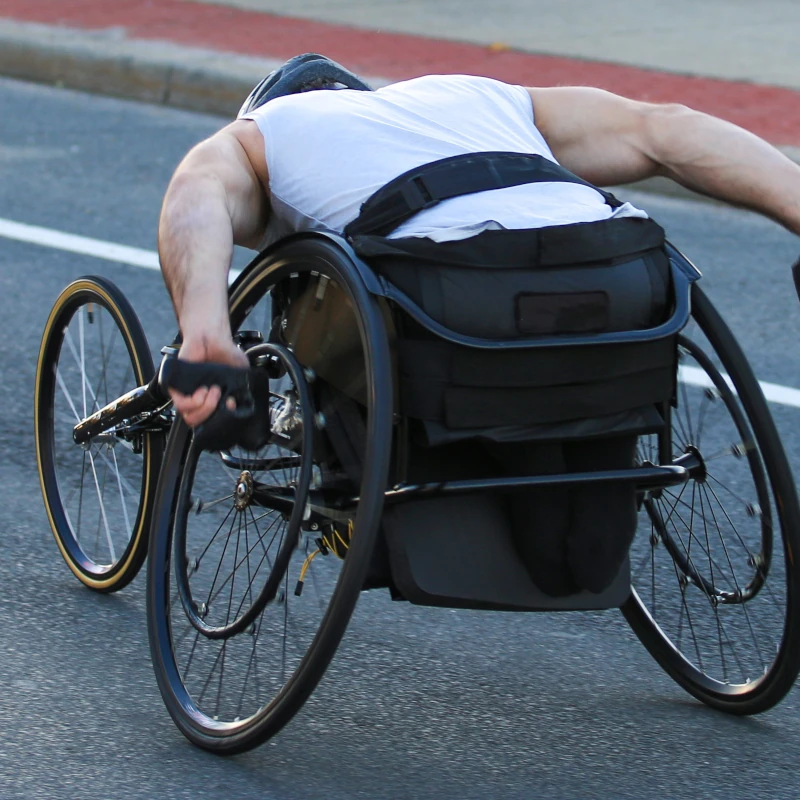
The bill, HB38, is meant to increase access and affordability for activity-specific wheelchairs—ie, devices used for sports, exercise, travel, and other specialized endeavors. It builds directly on the text of New Mexico’s SEBCM law, which passed in 2023 with virtually no opposition. And it will face its first legislative test today: a hearing before the Health and Human Services Committee.
HB38’s intent mirrors that of prosthesis-specific SEBCM legislation: preventing insurers from routinely invoking the “not medically necessary” clause to deny claims that carry profound medical implications. According to the United Spinal Association, “Wheelchair users face constant insurance denials and delays in obtaining appropriate equipment.” Those policies routinely cause “injuries and secondary health conditions such as pressure injuries (pressure sores) and rotator cuff and carpal tunnel injuries.” They also prevent wheelchair users from participating in activities that optimize their fitness, mental health, independence, employability, and overall quality of life.
Disability advocates have notched some gains in recent years. In 2023, Medicare/Medicaid began covering seat-elevation technology in power wheelchairs, reclassifying this feature as medically necessary instead of a luxury option. Last year, Colorado passed groundbreaking “right-to-repair” legislation, designed to streamline the cumbersome, often months-long process of routine maintenance, parts replacement, and other fixes for high-tech chairs. And the US Senate considered a bill in 2024 to broaden insurance coverage for manual wheelchairs.
Advocates in New Mexico hope HB38 can have the same impact the original SEBCM bill did—establishing a model that other states can follow. They’ll use many of the same tactics that helped the 2023 bill garner overwhelming support from both parties. The formula begins with powerful, personal testimony from people whose lives are affected by insurance denials. It includes detailed financial analysis showing that broader coverage reduces government health expenditures over the long run, by promoting a healthier population. And it’s propelled by a noncombative spirit that celebrates collaborative victories over bitter, bruising, winner-take-all partisanship.
The bill is co-sponsored by Liz Thomson, one of the key backers of the original SEBCM law and, importantly, the co-chair of the Health and Human Services Committee. It has the support of Governor Michelle Lujan Grisham, which is a good sign. There’s still a long way to go, but New Mexico has an encouraging track record. We’ll be watching.
* — Caveats: First, when New Mexico’s bill passed in 2023, it was labeled “So Kids Can Move,” later rebranded us “So Every Body Can Move.” Second, although NM was the first state to pass SEBCM as part of a national campaign, it was the second state overall: Maine passed its legislation one year earlier, in 2022, which gave rise to the national campaign.