
Looking for the perfect accessible travel resource? Look no further.

For the last couple of years, Amplitude’s annual travel issue has focused more on the philosophy of adaptive travel than the logistics. So we’re a couple of years behind on sharing resources and hacks to help amputees plan the perfect vacation.
Those resources are growing by leaps and bounds. Accessible tourism is rapidly moving from the margins into the mainstream, becoming one of the fastest-growing segments of the travel industry. It’s also one of the most competitive: Demographic change, technological innovation, and rising expectations have spurred the travel industry to expand its offerings and elevate its standards for customers with accessibility needs. Companies are moving beyond mere compliance to develop first-rate amenities for mobility and convenience, in hopes of wooing customers who have disabilities themselves and/or have a disabled person in their traveling party.
To get you back up to speed, we’re training our sights this year on the latest, greatest practical tools and info sources. You might have read about some of them in Amplitude already, but we’re bringing them together in a convenient, centralized package so you can plan the perfect vacation in 2026.
Accessible Lodgings Made Easy
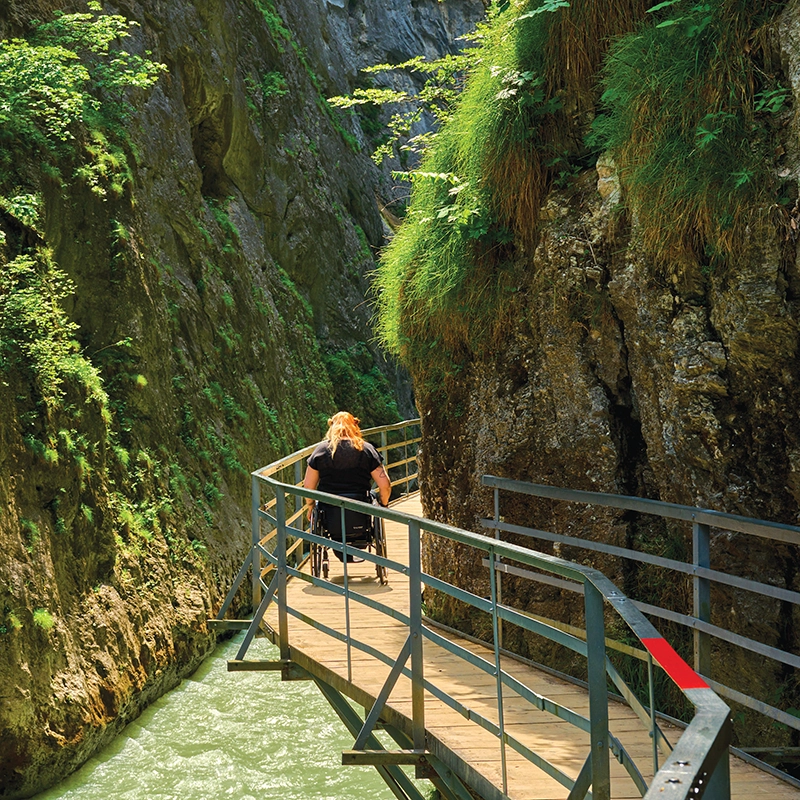
Can’t find a suitable place to stay on Airbnb? Try Becoming Rentable, our favorite accessible lodgings finder. Developed by wheelchair user Lorraine Woodward, the resource lists more than 1,000 properties that are disability-friendly in every sense. These short-term rental units—which range from hotel rooms to lofts, condos, apartments, cabins, wilderness retreats, and beyond—all exceed baseline compliance with the Americans With Disabilities Act (ADA). To be listed here, a property has to meet dozens of advanced accessibility criteria that ensure all guests can navigate easily, sleep comfortably, and use recreational, kitchen, and bathroom amenities conveniently.
In addition to its searchable database of certified lodging units, Becoming Rentable features a robust (and growing) state-by-state guide to accessible destinations. The site also features a stable of ambassadors (led by social media star Spencer West) who each bring their own unique perspective and sphere of expertise to the table. Get started at becomingrentable.com.
The Pulse of the Industry
TravelAbility describes itself as an “ecosystem,” with programs that serve every niche within the accessible travel universe—from consumers to businesses, tourism bureaus, media, entrepreneurs, artists, and beyond. Its annual industry convention (the TravelAbility Summit) draws hundreds of attendees; its new accessible travel film festival (launched last year) opens a specialized portal for disabled storytellers; its nonprofit foundation (travelability.org) offers an array of services for consumers and travel professionals; and the invaluable TravelAbility Insider provides monthly updates, news, and calls to action.
These disparate elements all come together in TravelAbility’s user-friendly “Accessible Destinations” section, which profiles more than 200 destinations worldwide (including 100-plus in North America). Each listing includes quick links to accessible lodging, transit, and sightseeing resources, along with relevant newsletter articles and other pertinent info. Start exploring at travelability.net.
The Accessible Travel OG

No one has done more to bring visibility to accessible travel than John Morris. He launched WheelchairTravel.org back in the Dark Ages of 2012, when air carriers, hoteliers, travel destinations, and media outlets blithely ignored the needs of people with disabilities. More than a decade later, his project has grown from a one-person blog into a global resource. Morris’s comprehensive, deep-dive city guides offer invaluable insights to dozens of popular destinations across five continents. The FAQ section includes separate primers for air travel, lodgings, public transit, and international tourism. And WheelchairTravel now sponsors accessible group vacations, all led by Morris himself; the 2026 itinerary includes Switzerland, Portugal, Greece, Australia, and Sicily.
And don’t overlook the blog archive, which includes hundreds of articles covering nearly every subject you can imagine. Want to know how to respond if an airline threatens you with arrest? Simple hacks for getting by in an inaccessible hotel room? Tips for using Amtrak, Lyft, buses, subways, and other public transit systems? All that and more awaits in WheelchairTravel’s vaults.
Crowd-Sourced Solutions
Where would modern travelers be without each other? Instead of turning to guidebooks like Fodor’s or Lonely Planet, we increasingly rely on the upvotes/downvotes logged at sites such as Yelp, Tripadvisor, and Google Reviews.
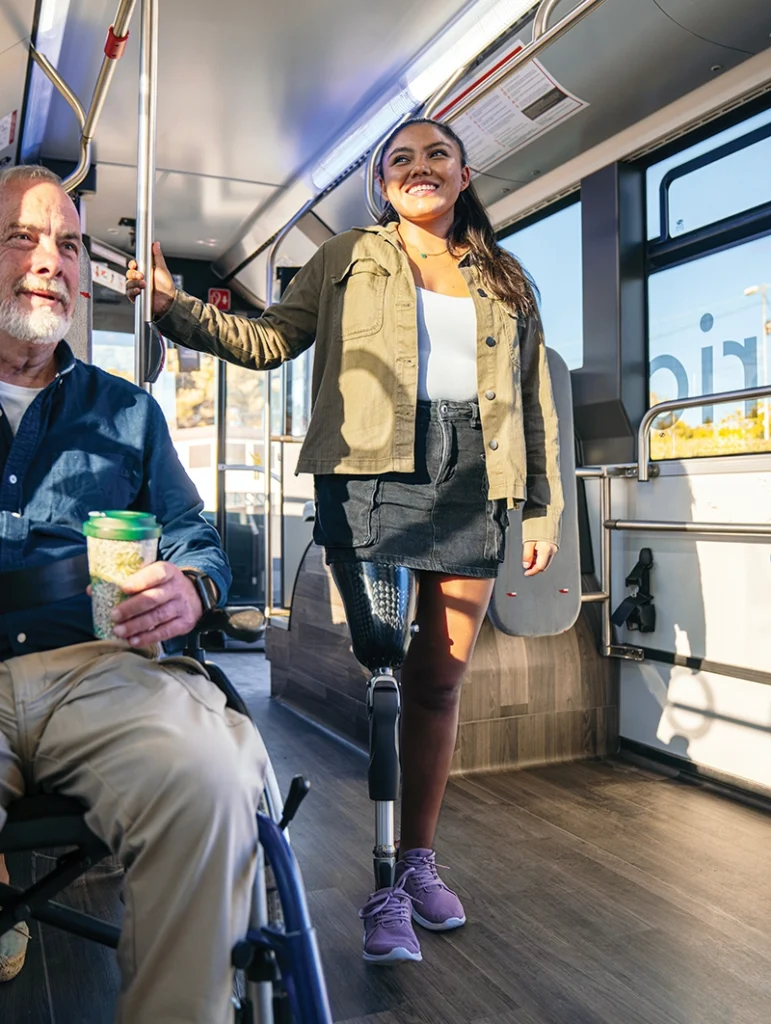
There’s not a single go-to when it comes to crowd-sourced intel related to accessible travel, but there are lots of contenders. The biggest we know of, Wheelmap, compiles user-provided accessibility ratings for more than two million public sites, including restaurants, theaters, malls, arenas, museums, transit stations, parks, and trails. The app uses a convenient map interface that resembles Google Maps, which—in theory, anyway—should make it easy to find accessible locations no matter where you are. We say “in theory” because when we spot-checked the app for cities we’re familiar with, we couldn’t get accessibility info for some of the most prominent tourist venues. Wheelmap claims to list nearly 300,000 accessible locations in the United States.
The same goes for Wheelmate, which takes the same basic geographical interface as Wheelmap but only tracks two types of accessible venues: public restrooms and parking spots. It, too, contains some useful information but is far from comprehensive.
A recent entry, Roll Mobility, debuted in 2023 and has seen rapid growth. Designed by three disabled entrepreneurs, Roll Mobility focuses on shopping, dining, and entertainment venues. There’s also a monthly newsletter (Rollup). According to its Instagram page, the app boasts reviews in more than 5,000 cities worldwide.
One of the oldest entries in this category is the Toronto-based AccessNow, which has been around since 2015. When we checked out their map online (map.accessnow.com), we didn’t find a tremendous number of reviews for our location, but we’re way out west. Eastern cities appear to be more densely charted.
All of these crowdsourced projects are still growing, and you can help them continue to expand by adding your own place-ratings. Bottom line: While these are useful resources, none of them is robust enough yet to plan a whole trip around it.
The Next Best Thing to Travelocity
Nothing beats the convenience of booking all your reservations—flights, cars, hotels, tours, and beyond—at a single site. Two one-stop shops fit that bill for travelers with disabilities: AccessibleGo and Wheel the World.
AccessibleGo branched out from its hotel-bookings focus two years ago, adding reservation capacity for power wheelchairs, wheelchair-accessible vehicles, package tours, venue-specific tickets, and more. The site offers accessibility guides to 30 major US cities, along with crowd-sourced ideas and recommendations in the community forum. Open a free AccessibleGo account and you become eligible for special discounts and other perks. Info at accessiblego.com.
Wheel the World has its roots in a single journey by founder Alvaro Silberstein, a C5 quadriplegic who summoned enough creative improvisation and stubborn persistence to trek the Andes in his wheelchair. He launched his site in 2018 to lower the barriers for other disabled travelers, building a community of 125,000-plus members worldwide. You can make your own bookings, sign up for sponsored group trips, and browse a catalog listing dozens of “accessibility-verified” destinations. Check it out at wheeltheworld.com.
Old-School Agent
During her 20 years as a healthcare provider, Sally Brown routinely saw patients who’d spent years postponing bucket-list experiences, only to have health challenges interfere before they could fulfill their dreams. She opened her travel agency, Sassy Sally, to help people work around various challenges (including cost, age, and disability) and see the world before the opportunity slips away. Brown partners with accessible excursion providers around the world, enabling her to customize itineraries to fit a given traveler’s specific needs. And, as the mother of a child with mobility challenges, she understands that accessibility means more than wheelchair ramps and roll-in showers. Find her online at travellikemesassysally.com.
Turn the Page
Digital media may rule in the 21st century, but lots of you still prefer the print format. (We give thanks for you every day!) Enter Accessible Journeys, one of a suite of disability-themed magazines from Mélange periodicals. Launched in 2024, the Vancouver-based publication comes out four times a year in downloadable PDF format, with attractive visuals and articles written largely by disabled writers who have extensive travel experience. Recent issues have included articles written by (or about) on-the-move amputees such as actor Kanya Sesser, author/songwriter Christa Couture, model Sara Banaeirad, and influencer Jessica Jordan Ping. You’ll also find location-specific features about off-the-beaten-path destinations such as rural Michigan and the Oregon coast, lots of content related to cruises, and the Accessible Escapes newsletter, which sends supplemental content straight to your inbox. Start reading at melangeandco.com/accessible-journeys-magazine.
Itinerant Influencers
For better and for worse, the era of DIY travel journalism has arrived. Quite a number of adaptive adventurers have exploded on social media, but those with the largest audiences aren’t always the ones with the best information. The sources we’ve listed below are all faithful to the facts. They also offer good virtual companionship, sharing their globetrotting advice, experiences, and inspiration with a sense of openness and curiosity.
Some of our favorites include:
My 1000 Miles
You may know the author of this site, Rebecca Levenberg, from her frequent contributions to Amplitude. In fact, she penned the main travel feature in our March/April 2024 edition (“Redefining Accessible Travel”). In that article, she observed that traveling with limb loss is about far more than merely “getting from Point A to Point B with all my parts intact. It’s about creating an overall experience that opens the door to curiosity, challenge, and joy.” My 1000 Miles reflects the same spirit, while embodying the idea that “travel” is a state of mind. Many of her posts describe visits to destinations just down the block or around the corner. By the way, she’s blown way past the mileage referred to in her blog’s name and is now closing in on 15,000 miles as an above-knee amputee. Read at my-1000-miles.blogspot.com.
Learners and Makers
Above-knee amputee Jodie St. Clair has been traveling the world nonstop since 2022 with her husband and two kids. These digital nomads have visited more than a dozen countries, and their content for YouTube and other social channels lives up to the family’s motto: “Slow down, enjoy, connect.” Last year they made their way through Vietnam, Japan, and Malaysia, among other places. While their videos only occasionally focus squarely on Jodie’s limb difference, the St. Clairs all share her talent for adaptation and improvisation. The basic message here is: All travel is adaptive travel in some sense. Check out their videos at youtube.com/LearnersandMakers. You’ll also find a special section on traveling with limb loss at the family’s website, learnersandmakers.com/accessible-travel.
Wheel Around the World
Launched 18 months ago by Aussie entrepreneur Shane Hryhorec, this YouTube channel has racked up more than 4 million views and counting. Hryhorec structures his posts in the manner of a streaming series, with distinct “seasons” focused on countries as varied as France, Taiwan, Austria, Japan, and Italy. He cheerfully navigates the random chaos of accessible travel, while seeking out locals living with disabilities to get a taste of how well (or poorly) their cultures include them. Tune in at youtube.com/@WHEEL_AROUND_THE_WORLD.
Elective Amputee
“I cut off my leg to travel the word,” Kerri Trammel wrote shortly after choosing to have her leg removed. Several years later, she’s turned that passion into a profession, with an online audience of more than 200,000 followers across multiple platforms. Her credo: “Stop thinking of travel in limitations. It’s about adaptation, creativity, and just going for it. My prosthetic leg has seen more of the world than I could have imagined, and it’s proof that mobility isn’t just about legs—it’s about mindset.” Trammel’s videos live on YouTube at youtube.com/@ElectiveAmputation.
Hold My Coffee
Alyssa Salemi is just your average girl-next-door bilateral amputee…if a full-time off-road four-wheel explorer counts as “average.” Salemi’s Instagram page features a steady stream of scenic pics from all sorts of exotic locales, largely in western North America. Her posts from the backcountry, she says, are meant to show readers “there’s always a path through or around whatever you think is blocking you.” Find her on Instagram @holdmycoffee_az.
Opener image: Vector Tradition/stock.adobe.com