By Kim Ousley

It started with what looked like a small purple bump on the outside of my left foot.
I was 43 years old and had just started a fun summer job answering questions for the Ball Canning Hotline. I assumed the bump was nothing more than a varicose vein. But as the weeks passed, it continued to grow, making it difficult to wear a shoe. Every morning, I stepped onto the floor with what I thought was plantar fasciitis pain. By evening, my foot felt heavy from the ankle down.
What I didn’t know was that an aggressive cancer was spreading.
After multiple doctor visits, an MRI and a biopsy, I heard the words that changed everything: “You have Stage 3 synovial sarcoma, and you may have to lose your foot to save your life.”
The shock was overwhelming. Thankfully, a friend came with me to the appointment because I could barely process what the doctor was saying, let alone think of questions to ask.
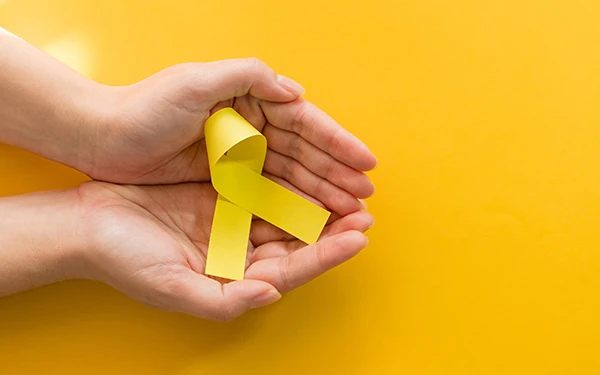
July is Sarcoma Awareness Month, a time dedicated to raising awareness of one of the rarest forms of cancer. Every year, I wear yellow throughout the month in honor of everyone affected by sarcoma. Sunflowers have also become a symbol of the disease, and each year I visit a sunflower field to celebrate both my “cancerversary” and my “ampuversary.”
Sarcomas are a rare group of cancers that develop in the body’s bones or soft tissues, including muscles, tendons, cartilage, nerves, blood vessels and fat. There are many different types, including synovial sarcoma, osteosarcoma, liposarcoma, rhabdomyosarcoma and Ewing sarcoma.
Although uncommon, sarcomas can affect people of any age. Bone sarcomas are diagnosed more frequently in children and young adults, while soft tissue sarcomas are more common in adults over 55.
According to the American Association for Cancer Research, an estimated 13,910 people in the United States will be diagnosed with soft tissue sarcoma in 2026, while another 4,110 will be diagnosed with bone and joint sarcomas. Despite advances in treatment, thousands of people will lose their lives to these diseases each year.
One reason awareness matters is that symptoms are often mistaken for less serious conditions. Depending on the type and location of the tumor, warning signs can include unexplained swelling, persistent pain, a growing lump or ongoing bone pain.
Recognizing those symptoms sooner can lead to earlier diagnosis, more treatment options and, in some cases, limb-sparing surgery.
If sharing my story encourages even one person to seek medical attention for something that doesn’t seem right, then wearing yellow every July is more than worth it.
For more information about symptoms, treatment and ways to support research, visit the Sarcoma Foundation of America.