


When you are going through any major trauma, feelings like grief, denial, anger, and bitterness are likely to arise. Wrestling with these emotions is normal for new amputees, especially in the early days that follow such a severe upheaval.
“If you don’t have negative thoughts going through some of these things, that’s not normal because you’ve had extensive physical and psychological trauma, and there is a phase where you are feeling pretty negative,” explains Patricia Isenberg, former chief operating officer of the Amputee Coalition.
So feeling blue immediately after amputation is natural, and having down days any time is just part of life. Yet periods of persistent negativity can impede progress in adjusting to limb loss.
If you feel negativity weighing you down, what can you do to lift that weight?
Name It, Claim It, Tame It
“Name it, claim it, and tame it” describes an approach to dealing with internal negativity, says John Foppe, president of Visionary Velocity Worldwide, which provides motivational speaking and consulting services.
The phrase sums up a therapeutic technique. In simple terms, it means recognizing what is behind your negativity, identifying what triggers it, and making changes to deal with its source.
Foppe knows about negativity. Born without arms, he says that until he was 10 years old, he was dependent on others to deal with his most basic needs. He was also angry, bitter, and negative—and he wasn’t getting better.
At that point, Foppe’s mother told his brothers, who had been assisting him with tasks of daily living, to let Foppe do things himself, even if he wrecked their household while learning on his own.
“Very few people will do as my mother did, that tough love,” Foppe says. “But it was like, ‘I love you so much; you can pull yourself out of this because there is a wonderful life to live.’”
To live that life, Foppe had to overcome his negative attitude. He says powerful feelings like fear and anger underlie negativity, and when you find yourself in that mindset, you must “name it, claim it, and tame it.” He says this is an essential step to conquering negative thinking.
He warns that denying negativity’s underlying factors, or admitting the existence of those factors but refusing to acknowledge that they have a profound effect on you and those close to you, will lead you into an uncontrollable downward spiral of deeper and deeper negativity.
“I believe in the old adage, ‘You have to feel it in order to heal it,’” he says, adding that people feeling negative should address it quickly. “You want to catch this on the front end.”
Following Clues to the Source
Psychotherapist Charlene Whelan, who has 40 years of experience in counseling, says negative thoughts stem from emotions warning us of unmet needs. However, the feelings delivering this message are not “negative.”
“Feelings are neither good nor bad,” she explains. “They just carry information.”
The trick to identifying your unmet needs is deciphering the information that these emotions convey. Whelan likens it to detective work, or putting together pieces of a jigsaw puzzle.
“Let’s say that after amputation you’re thinking that you’ll never do anything valuable again,” she postulates. “What’s the feeling behind that thought? You’re feeling worthless. Why are you feeling that? Because your identity has been such that loss of a limb affects where you find your own value.”
Thus, not only has amputation wounded your body, it has affected your body image and your sense of self-worth, too, and these also may be in need of healing and adjustment.
Meeting the Unmet Need
Although many people are not accustomed to searching for clues to the meaning behind their feelings, Whelan says most are emotionally equipped to cope with trauma like limb loss without the help of psychotherapy. People recovering from trauma need a vehicle for expressing their emotions so they can be examined and their root causes identified. Many avenues for emotional discovery are open in this regard.
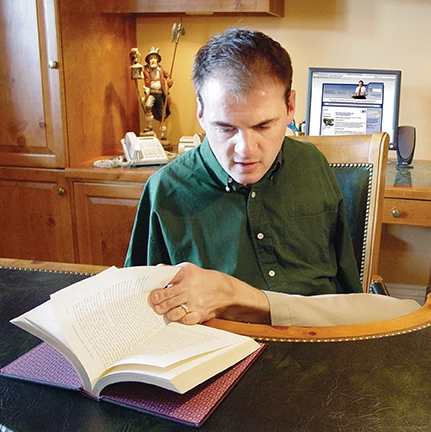
Following are just a few methods that you may want to try if negative thoughts are distracting you from recovery. (This list is not exhaustive, and a number of other approaches, such as art or music therapy, can be explored.)
Talking. Simple as it may seem, if something is nagging at you, just talking about your feelings can help you find the source of the trouble. Trained listeners are available. Several organizations, such as the Amputee Coalition, train peer visitors. These peers have successfully recovered from their amputations and are thriving. They volunteer to visit with new amputees, listen to their concerns, and talk constructively about their experiences.
However, you don’t have to talk to someone with limb loss. Someone who has gone through deep trauma may be able to share perspectives about what you are experiencing. Even talking to a friend or family member who is an attentive, sympathetic listener may help.
Group Support. Amputee support groups, which exist throughout the country, are also a potential source of information and feedback. You can find others who may share similar backgrounds with you and can provide tips and tricks for grappling with negativity that you haven’t found on your own. (To find a support group, visit www.amplitude-media.com/Resources/SupportGroups.)
Journaling. Writing to an imagined, gentle, nonjudgmental reader may help you pinpoint common themes in your thoughts, which can help identify the source of negativity. If you are comfortable sharing your journal, another person may also help you see patterns in your thoughts that you have not noticed.
Prayer and Meditation. Whether it is connecting with your spirituality through prayer or finding a calm place within yourself through which you can focus yourself in meditation, going to and returning from an inner quiet space can open you to different ways of perceiving yourself. This shift may offer you new understandings of your negativity.
Self-Management Programs. Structured self-management programs, like the Promoting Amputee Life Skills (PALS) program developed by Johns Hopkins University School of Public Health and the University of Washington, can help new amputees with negativity. When new amputees try to do too much too soon, they are often set up for failure, which then engenders negative reactions. Self-management helps avoid that.
Self-management programs guide amputees to set measurable, realistic goals that they are confident they can attain. Isenberg emphasizes that these programs reinforce positivity by identifying achievable milestones along the way to the final goal that participants can reward themselves for attaining. Such a process helps change negative self-talk.
“If you’re saying, ‘I’ve done well; I’ve reached my goal; I deserve a reward,’ then you are realizing that you are a pretty competent person who is moving forward in life,” Isenberg says.
“Some people become negative because others are giving them the ‘shoulds,’” Isenberg says. “‘You should do this, you should be over this by now,’ and so on. The person this is being said to is thinking, ‘I’m pretty messed up right now, but I must be even more messed up than I thought because everyone seems to think that I should be further along.’”
Conclusion
There is no one-size-fits-all approach to finding your way through negativity. To suit your needs, you may want to adapt or combine the methods discussed. Also, you can take from others’ experiences what is meaningful to you and apply that to your situation. To that end, perhaps you will find this thought from Foppe helpful for moving forward:
A Note for Family and Friends: To be successful, the impetus toward overcoming negativity through self-discovery and change must come from the amputee. Pushing someone who is adjusting to limb loss to take a specific course of action toward recovery or to just “get better” puts tremendous pressure on him or her to comply. But he or she may not yet be ready or have the desire or tools to do so. Even though such exhortations may be well intentioned, they are unhelpful and even detrimental to adjustmen
This article is for informational and educational purposes only and is not meant to be a substitute for personal medical advice. For specific advice about your treatment, consult your physician or other qualified healthcare provider.
Seeking Professional Help
Persistent negativity may denote deeper issues. If you feel you have made no progress in decreasing your negative thoughts for a number of weeks, you are unable to identify the crux of your negativity, or you are repeatedly experiencing the following conditions, it may be time to seek professional counseling.
Signs and Symptoms of Depression
- Persistent sad, anxious, or “empty” feelings
- Feelings of hopelessness or pessimism
- Feelings of guilt, worthlessness, or helplessness
- Irritability, restlessness
- Loss of interest in activities or hobbies once pleasurable, including sex
- Fatigue and decreased energy
- Difficulty concentrating, remembering details, and making decisions
- Insomnia, early-morning wakefulness, or excessive sleeping
- Overeating or appetite loss
- More than fleeting thoughts of suicide, suicide attempts
- Aches or pains, headaches, cramps, or digestive problems that do not ease even with treatment
Note: People with depressive illnesses do not all experience the same symptoms. Symptoms vary depending on the individual.
From the National Institute of Mental Health (www.nimh.nih.gov/health/publications/depression/index.shtml?ct=39994).