

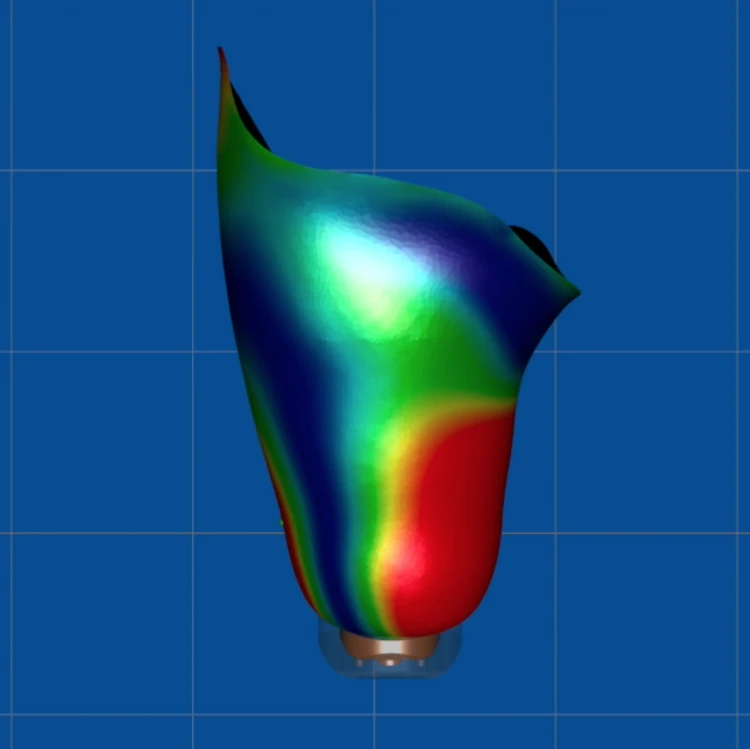
This decade has brought steady improvement in the quality of 3D-printed prosthetic limbs and sockets. The advances have turned many once-skeptical prosthetists into believers in the technology, which promises greater comfort, lower cost, and more personalization than conventional fabrication.
But medical insurers have never settled on definitive coverage policies for 3D-printed prosthetics. The lack of certainty has left clinicians unsure of how much they’ll get paid (if anything) for providing a patient with a 3D-printed device—and that, in turn, has slowed the adoption of this technology, to the dismay of 3D-curious patients.
Everything changed in September, when two key insurance industry organizations—the Durable Medical Equipment Medicare Administrative Contractors (DME MACs) and Pricing Data Analysis and Coding (PDAC)—gave their blessing to 3D printing (aka “additive manufacturing”) as a covered fabrication method for sockets and limbs. While neither DME MACs nor PDAC is operated by the federal government, both companies provide essential billing and processing services to Medicare. Their approval is therefore tantamount to Medicare approval. Going forward, Medicare claims for 3D-printed devices will be treated exactly the same as claims for conventionally fabricated prostheses.
“This decision changes everything. It means clinicians can confidently prescribe 3D-printed prosthetics, insurers can cover them, and patients can access care that’s faster, more affordable, and personalized to their needs,” said François Minec, an executive for HP Additive Manufacturing Solutions, in a press release. HP lobbied for the policy clarification as part of a consortium that included the American Orthotic and Prosthetic Association (AOPA) and other organizations.
“This is a meaningful step forward that affirms the role of additive manufacturing in clinical practice,” added AOPA board member Chris Baschuk on his LinkedIn page. At its website, AOPA chimed in: “This new correct coding reminder is consistent with AOPA’s position that 3D printing/additive manufacturing should be considered a valid fabrication method. It is also another positive step in [Medicare] accepting the newer technologies and reflects the important, trusted relationships AOPA has built with these decision makers.”
Plastics Today reports that the lobbying effort succeeded after engineers, clinicians, and manufacturing executives presented evidence to support the benefits of 3D-printed devices. According to the outlet, a pilot project in Kenya was particularly persuasive in demonstrating 3D printing’s breakthrough potential. That initiative, a collaboration involving HP and the Limb Kind Foundation, provided Kenyan amputees with custom-fitted prosthetic devices using a trans-Atlantic digital process. Clinicians in Kenya sent scans of their patients’ residual limbs to a US-based design facility, which produced the sockets and shipped them back to Kenya.
“What excites us most is the potential to produce a significantly greater number of prostheses in a much shorter time frame, allowing us to help more children than ever before,” Limb Kind executive director Robert Schulman told Plastics Today. “It’s more than just speed. It’s about restoring mobility, dignity, and joy.”
Another key data point came from the Veterans Affairs Puget Sound healthcare facility, where prosthetists produced a 3D-printed socket for a below-knee prosthesis entirely in-house, with support from specialized socket-fitting software from Radii Devices.