
Amplitude
  • MAGAZINE
    • Subscribe
    • Current Issue
    • Archives
    • Living With Amplitude
      • Adaptive Living
      • Amputee to Amputee
      • Arts & Culture
      • Education
      • Featured
      • Getting Support
      • Giving Support
      • Health & Medicine
      • Money Matters
      • Relationships
      • Science & Technology
      • Sports & Recreation
      • Transportation & Mobility
      • More Amplitude
    • View Print Edition
  • NEWSLETTER
    • Recent Articles
    • Newsletter Archive
  • RESOURCES
    • Guide to Living With Limb Loss
    • Amputee Resource Directory
  • SUBSCRIBE
    • Subscribe to Magazine
    • Subscribe to Weekly Newsletter
    • Subscriptions FAQ
    • ABOUT US
      • Contact Us
      • Advertiser Information
      • Privacy Policy
      • Cookie Policy
      • Cancellation Policy
  • TOP PROSTHETISTS
    • Top Prosthetists 2026
    • Top Prosthetists 2025
  • WINTER PARALYMPICS
    • Latest News
    • Meet the Athletes
    • Paralympic Pathways
    • 2024 Summer Paralympics
No Result
View All Result
  • MAGAZINE
    • Subscribe
    • Current Issue
    • Archives
    • Living With Amplitude
      • Adaptive Living
      • Amputee to Amputee
      • Arts & Culture
      • Education
      • Featured
      • Getting Support
      • Giving Support
      • Health & Medicine
      • Money Matters
      • Relationships
      • Science & Technology
      • Sports & Recreation
      • Transportation & Mobility
      • More Amplitude
    • View Print Edition
  • NEWSLETTER
    • Recent Articles
    • Newsletter Archive
  • RESOURCES
    • Guide to Living With Limb Loss
    • Amputee Resource Directory
  • SUBSCRIBE
    • Subscribe to Magazine
    • Subscribe to Weekly Newsletter
    • Subscriptions FAQ
    • ABOUT US
      • Contact Us
      • Advertiser Information
      • Privacy Policy
      • Cookie Policy
      • Cancellation Policy
  • TOP PROSTHETISTS
    • Top Prosthetists 2026
    • Top Prosthetists 2025
  • WINTER PARALYMPICS
    • Latest News
    • Meet the Athletes
    • Paralympic Pathways
    • 2024 Summer Paralympics
No Result
View All Result
Amplitude

Rethinking Community Gardens for Accessibility

April 22, 2026
0

By Kim Ousley

The summer after my amputation, I secured a small plot in a community garden. A dear friend paid the $15 seasonal fee—her way of helping me get outside and moving with my fairly new prosthetic leg.

Her youngest son was five at the time and eager to help. We called it our “experimental” garden, since neither of us really knew what we were doing. What we didn’t expect was how much it would give back to us. It became a social experiment of sorts—and a powerful boost to both my mental and physical health.

We kept that garden going for several years. He learned how to plant, pull weeds, and harvest right alongside me—and even developed a taste for fresh salad ingredients.

As we celebrate Earth Day, it’s a reminder that access to green spaces should be something everyone can experience.

So why should communities consider making their gardens fully accessible, regardless of physical ability?

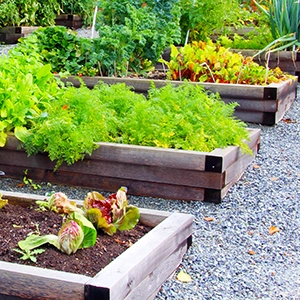
Gardening is a simple, healthy way to create a safe and welcoming environment for people of all skill levels and abilities. For those using wheelchairs or electric scooters, traditional gardens can be limiting—bending down or standing for long periods isn’t always possible. But something as simple as raised beds at the right height can make participation possible again.

The term “horticultural therapy” (HT) refers to a professional, evidence-based practice that uses plants and gardening activities to achieve specific therapeutic goals for physical, mental, and social health. Led by credentialed therapists, it has been shown to improve memory, motor skills, and emotional well-being—especially in community settings.

Communities that have incorporated disability-friendly design into their gardens are seeing the impact: increased participation, stronger connections, and a shared sense of purpose.

My own garden wasn’t in an ADA-friendly space, but with the help of my little buddy, I made it work. Since then, I’ve spoken with many people in my city about creating more inclusive gardening spaces for those who want to participate but face physical barriers.

I’m starting to see that shift happen—and I hope to be part of growing it.

So what should you consider when planning a more inclusive garden?

Universal design is the foundation. It means creating a space that is usable by everyone, regardless of ability. This can include:

  • Raised beds at wheelchair or standing height, so no one has to bend or risk falling
  • Adaptive gardening tools with rubber grips, extended handles, and accessible water sources
  • Wide, flat, and smooth pathways—at least 36 to 48 inches—to allow wheelchairs to turn comfortably (using pavement or compacted gravel)
  • Volunteers who are willing to lend a hand and support inclusive participation

Getting involved in a local community garden can have lasting benefits. Gardening supports mobility, coordination, strength, balance, endurance, social connection, and memory.

With a few thoughtful adaptations, it can be part of a healthy, active lifestyle—for everyone.

Tags: accessibilityadaptingcommunitygardeningoutdoors
Previous Post

Adidas Joins Movement to Sell Single Shoes

Next Post

Limb Preservation Foundation’s 40th Anniversary Ruby Gala

Next Post
Limb Preservation Foundation’s 40th Anniversary Ruby Gala

Limb Preservation Foundation’s 40th Anniversary Ruby Gala


Subscribe Today

Recent Posts

  • Veterans Find Strength and Healing through Surf
  • Amputee Puts GEM Hand to Work
  • Advancing Prosthetic Care With ZEUS
  • Taking Power Over Pain with Altius 
  • Behind the Mic: Where the Real Story Lives

201 East 4th Street
Loveland, CO 80537
303-255-0843
©2026 Amplitude Media Group

Today’s amputees are living more dynamic lives than ever before. Amplitude tells their stories.

About Us
Privacy Policy
Subscribe

FOLLOW US

Facebook Twitter Instagram Linkedin

No part of this electronic publication/website may be reproduced in any form or by any means without prior written permission from Amplitude Media Group.

No Result
View All Result
  • MAGAZINE
    • Subscribe
    • Current Issue
    • Archives
    • Living With Amplitude
      • Adaptive Living
      • Amputee to Amputee
      • Arts & Culture
      • Education
      • Featured
      • Getting Support
      • Giving Support
      • Health & Medicine
      • Money Matters
      • Relationships
      • Science & Technology
      • Sports & Recreation
      • Transportation & Mobility
      • More Amplitude
    • View Print Edition
  • NEWSLETTER
    • Recent Articles
    • Newsletter Archive
  • RESOURCES
    • Guide to Living With Limb Loss
    • Amputee Resource Directory
  • SUBSCRIBE
    • Subscribe to Magazine
    • Subscribe to Weekly Newsletter
    • Subscriptions FAQ
    • ABOUT US
      • Contact Us
      • Advertiser Information
      • Privacy Policy
      • Cookie Policy
      • Cancellation Policy
  • TOP PROSTHETISTS
    • Top Prosthetists 2026
    • Top Prosthetists 2025
  • WINTER PARALYMPICS
    • Latest News
    • Meet the Athletes
    • Paralympic Pathways
    • 2024 Summer Paralympics

Amplitude
We use cookies to ensure that we give you the best experience on our website. If you continue to use this site we will assume that you are happy with it.