By Kim Ousley

For Josh Hines, learning to live with limb loss happened in stages. First came the loss of one toe, then another, then his foot. Two years after becoming a below-knee amputee, persistent infections and wounds that wouldn’t heal led to another major change: Surgeons removed his knee.
“You gotta relearn everything,” Hines says of becoming an above-knee amputee.
The medical ordeal began with severe cramping and discoloration in his foot. Doctors initially struggled to determine what was causing it until a cardiologist recognized Buerger’s disease, a rare condition affecting blood vessels in the arms and legs. “This is exactly what you have,” Hines remembers the doctor telling him.
Today, Hines walks with a prosthesis, drives, and cares for his family. He has become confident navigating the physical realities of life as an above-knee amputee. But another consequence of those years of medical trauma has proved more difficult to leave behind.
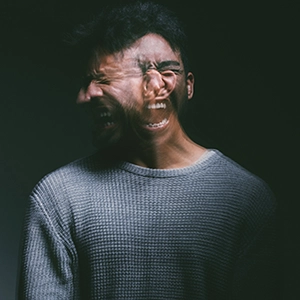
Hines lives with PTSD.
It can show up as panic, hypervigilance, sleeplessness, and an overwhelming sense that something bad is about to happen. “I’m constantly looking at doors … something is trying to hurt me,” he says.
Hospitals can be particularly difficult. When his daughter was born, Hines found himself back in an environment his mind and body had come to associate with frightening experiences. Even during what should have been a joyful occasion, he struggled to relax.
“I didn’t sleep pretty much that whole time,” he says.
At first, Hines hoped what he was experiencing would simply disappear. “I’m OK, I’m fine … this will go away,” he remembers telling himself.
It didn’t. Instead, he had to learn how to recognize what was happening and what helped him get through it. Sometimes that means removing himself from a situation, sitting alone in a parking lot, listening to music, or directing his attention somewhere else.
“Finding something else to focus your brain on … step away from the situation,” he says.
His wife has learned to recognize the early signs, too. When Hines begins struggling, she can help create the space he needs to regain his footing. “She got really good at calming me down,” he says.
That experience has also shaped the way Hines talks with other amputees. He doesn’t try to convince someone newly facing limb loss that everything will be easy or immediately return to normal. He would rather acknowledge how profoundly life can change and give people room to grieve, adjust, and move forward at their own pace.
For Hines, that kind of honesty may be one of the most useful things one amputee can offer another. His physical recovery required learning how to move through the world differently. Living with PTSD has required another kind of adaptation: learning when to step away, where to turn for support, and how to give himself time when his mind hasn’t caught up with the safety of the present.